
Sections
- Intro to Cloud Security
- Cloud Security Environment Overview
- Navigating Cloud Computing Security Risks and Disadvantages
- Cloud Computing Data Security Best Practices
- Migration and Infrastructure Transformation
- Hybrid Cloud Security Solutions
- Cloud System Monitoring
- Governance and Compliance Frameworks
- Cloud Integration Platforms and Unified Ecosystems
- Conclusion: Security Requires Control by Design

Intro to Cloud Security
The cloud has fundamentally changed how organizations build, scale, and operate digital systems. From artificial intelligence and high-performance computing (HPC) to life sciences research and government workloads, the cloud has become the default platform for innovation. Yet as cloud adoption accelerates, security has emerged as the single most consequential constraint on success. Not because security is unsolvable—but because in many cloud environments, organizations no longer control the variables that matter most.
Modern cloud security isn’t limited to firewalls and encryption. It is an architectural discipline that governs how data is accessed, where it resides, how workloads perform under pressure, and how risk is managed over time. As workloads grow more complex and data volumes explode, especially in AI training, simulation, and regulated research, traditional security assumptions begin to break down. Shared infrastructure, opaque pricing models, and fragmented responsibility boundaries introduce systemic risk that is difficult to detect—and even harder to remediate after the fact.
This challenge is especially acute for organizations operating in high-stakes environments. Engineering teams running time-sensitive simulations cannot afford unpredictable performance that compromises availability. Data scientists training AI models must ensure the integrity of training data and the confidentiality of intellectual property. Research institutions and government agencies face strict compliance mandates that demand precise control over access, residency, and auditability. In these contexts, security failures are not abstract technical events; they translate directly into missed deadlines, regulatory exposure, financial loss, or reputational damage.
Compounding the problem is a growing disconnect between responsibility and control in traditional cloud computing models. While providers emphasize a shared responsibility framework, customers are often left managing security controls atop infrastructure they cannot see, hardware they do not own, and networks they do not fully govern. Cost pressures further erode security posture, as organizations reduce logging, monitoring, or backup frequency to manage unpredictable monthly bills. Over time, this erosion of control creates an environment where security risks accumulate quietly—until a breach, outage, or audit failure forces them into the open.

This guide is designed to address that gap. Rather than treating cloud security as a checklist of tools or a compliance exercise, it examines security as an end-to-end system shaped by architectural decisions, operational discipline, and governance models. It explores how different cloud environments distribute risk, why multi-tenant architectures introduce structural security challenges, and how emerging technologies such as AI simultaneously strengthen and threaten modern defenses.
Throughout, the focus is on practical clarity: understanding not just what cloud security is, but how it actually works in real-world environments—and where it most commonly fails.
By the end of this guide, readers should have a clear framework for evaluating cloud security strategies across performance, cost, compliance, and operational control.
Whether you are assessing a new cloud deployment, migrating sensitive workloads, or re-examining an existing environment that no longer feels predictable or secure, this resource is intended to serve as a comprehensive reference for making informed, defensible decisions about cloud security.
Key Takeaways
- Cloud security is an architectural decision, not just a tooling problem. True security depends on how infrastructure is designed, who controls it, and how responsibility is distributed—not merely on add-on security services.
- Loss of control is the root cause of most cloud security failures. Shared infrastructure, opaque pricing models, and fragmented responsibility create environments where risk accumulates silently over time.
- Performance, cost predictability, and security are inseparable. Unpredictable performance and billing pressure often lead teams to disable logging, reduce monitoring, or weaken backup policies—directly undermining security posture.
- Multi-tenant cloud models introduce structural risk. Shared hardware, noisy neighbors, and limited visibility expand the attack surface and complicate compliance, particularly for HPC, AI, and regulated workloads.
Dedicated, single-tenant environments simplify security and compliance. When infrastructure is isolated, customizable, and fully observable, security controls become easier to enforce, audit, and optimize over the long term.


Cloud Security Environment Overview
Cloud security is a comprehensive framework consisting of technologies, policies, and controls designed to protect data, applications, and infrastructure from cyber threats. It ensures data privacy, compliance with regulatory standards, and consistent operational availability where users often lack direct physical control over their computing resources.
Unlike traditional on-premises environments, cloud environments introduce a fundamental shift in control: organizations no longer maintain direct physical custody of servers, storage devices, or networking equipment. As a result, security must be enforced through architectural design, configuration discipline, and continuous monitoring rather than physical access.
This loss of physical control changes the threat landscape in meaningful ways. Attack vectors such as compromised credentials, exposed APIs, misconfigured storage, and insecure service integrations are now among the most common causes of breaches. For HPC, AI, and scientific workloads, the stakes are even higher. These environments often process massive datasets, operate long-running jobs measured in days or weeks, and rely on tightly coupled parallel systems. A single security misstep—or performance disruption caused by another tenant—can invalidate results, waste significant compute budgets, or expose sensitive research data.
Effective cloud security therefore serves three main objectives:
- Protect confidentiality of data and intellectual property
- Maintain integrity of computational results and workflows
- Ensure availability and predictability of critical workloads
Cloud Environment Types and the Shared Responsibility Model
As organizations transition from on-premises infrastructure to cloud-based services, security responsibilities become divided between the cloud provider and the customer. This division is formalized through the Shared Responsibility Model, which varies significantly depending on the cloud delivery model selected.
| Cloud Environment Type | Primary Focus | Customer Responsibility Level |
| Infrastructure as a Service (IaaS) | Fundamental computing resources (servers, storage) | Highest: Manages OS, apps, data, and virtual network controls |
| Platform as a Service (PaaS) | Development and deployment frameworks | Medium: Manages applications and data |
| Software as a Service (SaaS) | Fully managed end-user applications | Lowest: Manages user access and internal data security |
- In Infrastructure as a Service (IaaS) environments, the cloud provider is responsible for the physical data center, hardware, and foundational networking, while the customer retains responsibility for the operating system, applications, data, identity management, and virtual network controls. This model offers the greatest flexibility—and the greatest security accountability—for the customer. Most cloud security incidents in IaaS environments stem not from provider failure, but from misconfigurations or access control errors at the customer layer.
- Platform as a Service (PaaS) shifts some operational burden to the provider by abstracting operating systems and runtime environments. While this reduces administrative overhead, customers remain fully responsible for application security, data protection, and identity governance. Security visibility is often reduced compared to IaaS, which can complicate audits and incident investigations.
- In Software as a Service (SaaS) models, the provider manages nearly the entire technology stack. Customers primarily control user access and data usage policies. While SaaS can simplify operations, it offers the least architectural control and may be unsuitable for workloads with strict compliance, performance, or customization requirements.
A critical misconception is assuming that “cloud provider security” equates to “end-to-end security.” In reality, the more control an organization desires over performance, compliance, and data handling, the more responsibility it must actively assume.
Single-Tenant vs. Multi-Tenant Environments
Beyond delivery model, tenancy architecture plays a defining role in cloud security and performance. Traditional public clouds rely heavily on multi-tenant architectures, where many customers share the same physical hardware through virtualization. While cost-efficient at scale, this approach introduces inherent tradeoffs.
Summary of Single Tenant and Multi-Tenant Architecture
| Feature | Single-Tenant (NZO Cloud) |
Multi-Tenant (Traditional Public Cloud) |
| Resource Allocation | 100% Dedicated bare-metal hardware (through PSSC Labs) | Shared virtualized resources |
| Security Isolation | Federated data control; no “noisy neighbors” | Shared environments with potential bad actors |
| Performance | Predictable, reliable, and repeatable performance | Fluctuating performance due to system sharing |
| Customization | Users can design custom cloud instances engineered for their needs | Limited, “off-the-shelf” instance types |
In multi-tenant environments, security isolation depends on hypervisors, shared management planes, and complex segmentation rules. Although these mechanisms are robust, they expand the attack surface and introduce risks such as:
- Lateral movement between tenants in the event of a hypervisor or configuration failure
- Reduced visibility into neighboring workloads
- Exposure to “noisy neighbors” that degrade performance and disrupt security tooling

By contrast, single-tenant environments allocate 100% dedicated hardware to a single organization. With no shared compute, storage, or memory resources, entire classes of multi-tenant risk are eliminated. Security controls become simpler, more transparent, and easier to audit. Performance becomes a predictable variable rather than a fluctuating one.
Selecting the Right Environment (Single Tenant vs Multi)
Choosing between single-tenant and multi-tenant models requires a deep assessment of an organization’s specific technical requirements, budgetary constraints, and security priorities.
Why an organization would choose a single-tenant environment:
- Total Performance Control: Organizations with HPC workloads, such as CFD simulations or AI model training, require consistent, repeatable performance that is not impacted by other users.
- Enhanced Security and Compliance: For entities managing sensitive data, such as federal agencies or life sciences researchers, the isolation provided by single-tenancy eliminates the risk of lateral movement and “noisy neighbor” interference.
- Hardware Customization: Single-tenant models through PSSC Labs allow users to specify the exact processors, memory density, and networking backplanes required for their applications, avoiding the limits of “off-the-shelf” instances.
- Fixed Budgeting: Organizations that need to ensure grant funding or departmental budgets last for the full project term prefer the fixed subscription pricing of NZO Cloud, which eliminates the surprise charges often found in multi-tenant models.
Why an organization would choose a multi-tenant environment:
- Variable or Low Resource Use: Companies that only use a small amount of processing power or utilize cloud resources sporadically—perhaps once or twice a month—may find the shared model more cost-effective for their limited use cases.
- Immediate “Off-the-Shelf” Scaling: For organizations that prioritize rapid deployment of standard services over precision performance, the pre-configured instances offered by the “Big 3” providers allow for quick setup.
- Minimal IT Expertise Required: Smaller teams without the need for dedicated cluster engineering may rely on the standard, fully managed frameworks common in traditional public cloud models.
- Short-Term Projects: If resources are only required for an extremely short period, the pay-per-service model of traditional vendors may be more palatable than a dedicated contract.
Security Tradeoffs in Hybrid and Mixed Tenancy Models
Many organizations have adopted a Mixed Tenancy approach to balance security requirements with operational costs. Under this model, critical workloads and sensitive data reside on 100% dedicated (single-tenant) infrastructure, while less sensitive operations utilize shared (multi-tenant) resources.
A primary drawback of traditional multi-tenant environments is the “noisy neighbor” effect. This occurs when other organizations sharing the same physical hardware consume excessive amounts of bandwidth, CPU, or memory, leading to resource saturation. Because system resources are being split among many users, your performance may fluctuate or drop unexpectedly, which can be disastrous for time-sensitive engineering simulations or AI training cycles. Beyond performance, sharing space with noisy neighbors could mean sharing an environment with potential bad actors, which complicates security isolation and increases the risk of lateral movement between data sets.
Advantages and Disadvantages of Hybrid and Mixed Tenancy Configurations
| Feature | Security Pros | Security Cons |
| Isolation | Segregates “crown jewel” (the most important) data on isolated, bare-metal hardware. | The complexity of managing security policies across two different environments. |
| Threat Mitigation | Removes risks of lateral movement and bad actors associated with multi-tenancy. | Requires unified controls to prevent “blind spots” between clouds. |
| Visibility | Total control over connections and data transfers in the dedicated segment. | Resource invisibility in the multi-tenant segment can hide undetected breaches. |
| Compliance | Ensures data residency and strict ISO 27001-certified security controls. | Difficulty in guaranteeing residency for data that flows into the shared segment. |
NZO Cloud empowers users to control these considerations by offering flexible delivery options that eliminate the noisy neighbor problem for mission-critical tasks. Organizations can choose from three distinct models:
- Cloud HPCaaS (As A Service): Provides fixed-fee remote access to 100% dedicated, bare-metal computing resources.
- Hosted Edition: A combination of purchased hardware and managed connectivity where PSSC Labs manages the hosting and network within a secure data center.
- On-Premise Edition: High-performance resources are custom-configured, manufactured, and shipped directly to your data center for maximum physical oversight.
This variety allows businesses to bridge the gap between legacy on-premises applications and modern cloud storage while maintaining the predictable, reliable, and repeatable performance necessary for project success. By isolating critical research in a single-tenant environment, you ensure that your throughput is never impacted by the activity of others on the network.
Agile Development and Custom Configurations
Security is strongest when it is embedded into system design from the outset. Through an agile, component-level approach, PSSC Labs enables organizations to design infrastructure that aligns precisely with their workloads. Rather than relying on rigid, off-the-shelf instances, users can specify processors, memory configurations, GPU architectures, and high-speed networking optimized for their applications.

This design-driven approach reduces misconfiguration risk, simplifies long-term maintenance, and stabilizes the environment over multi-year projects. Fewer architectural changes mean fewer opportunities for security drift—a common problem in fast-moving public cloud platforms.
Key Components of Cloud Security
Achieving a resilient cloud security posture requires a multi-faceted approach that addresses every layer of the computing environment, from individual user identities to global regulatory standards. By integrating advanced monitoring tools with robust encryption and governance frameworks, organizations can safeguard their high-performance workloads against an increasingly complex threat landscape.
The following table summarizes the fundamental building blocks of a secure cloud infrastructure:
| Component | Description |
| Identity and Access Management (IAM) | Manages who has access to cloud resources and what actions they can perform, often using multi-factor authentication (MFA) and the principle of least privilege. |
| Data Security | Involves encrypting data both at rest (stored) and in transit (moving across networks) to protect it from unauthorized access. |
| Network Security | Uses tools like virtual firewalls, network segmentation, and intrusion detection/prevention systems (IDPS) to monitor and control network traffic flows. |
| Visibility and Posture Management | Tools like Cloud Security Posture Management (CSPM) continuously monitor configurations, permissions, and compliance to identify and remediate misconfigurations, which are a leading cause of data breaches. |
| Threat Detection and Response | Utilizes Security Information and Event Management (SIEM) and Extended Detection and Response (XDR) systems to aggregate logs, detect suspicious activities in real-time, and automate incident response. |
| Governance and Compliance | Involves establishing policies and adhering to regulatory frameworks such as GDPR, HIPAA, and PCI DSS to manage risk and avoid legal penalties. |

Navigating Cloud Computing Security Risks and Disadvantages
As cloud ecosystems evolve—particularly with the widespread integration of artificial intelligence—the complexity of managing cloud security risks has increased substantially. Modern enterprises rarely operate within a single, isolated environment. Instead, they rely on a mix of public cloud services, private infrastructure, and hybrid deployments that span multiple providers. While this multi-cloud approach offers flexibility, it also introduces what security teams commonly describe as the “larger target” problem.
In practice, every additional cloud platform, API surface, identity store, and integration point expands the attack surface. Security controls that may be effective in a single environment often become fragmented when stretched across heterogeneous platforms with different defaults, logging formats, and access models. The result is a growing set of security gaps that traditional perimeter-based defenses struggle to close.
At the same time, many organizations assume that cloud-native availability and scale inherently translate into strong security. In reality, convenience-driven architectures often optimize for rapid deployment and elasticity at the expense of confidentiality and integrity unless security is intentionally designed into the environment. Maintaining the CIA Triad—Confidentiality, Integrity, and Availability—in cloud and HPC contexts therefore requires deliberate architectural choices rather than reliance on provider defaults.
The Intersection of Cloud Security and AI
Artificial intelligence has fundamentally reshaped the cloud security landscape. AI now operates on both sides of the equation: it enables faster, more adaptive defense mechanisms, while simultaneously empowering attackers to automate reconnaissance, exploit misconfigurations, and evade traditional detection methods.
For organizations running HPC and data-intensive workloads, AI-driven security is no longer optional. Long-running simulations, shared research pipelines, and massive datasets generate volumes of telemetry that exceed human-scale monitoring. AI systems provide the only practical way to analyze these signals continuously and respond in near real time.
However, the effectiveness of AI-driven security depends heavily on the environment in which it operates. Highly variable, multi-tenant platforms generate significant “noise,” reducing detection accuracy and increasing false positives. In contrast, dedicated environments produce cleaner baselines that allow AI models to focus on meaningful deviations rather than background contention.
-
AI-Powered Threat Detection
Modern cloud security platforms use AI to analyze diverse telemetry sources, including scheduler logs, node-level CPU and memory utilization, storage I/O patterns, and network traffic flows. In HPC environments, this visibility extends beyond simple login monitoring to include job queue behavior, data movement between nodes, and abnormal resource consumption during execution.

NZO Cloud provides live reporting, monitoring, and event logs through its Cloud HPC Orchestrator, enabling administrators to correlate performance metrics with security signals in real time. Because workloads operate on 100% dedicated infrastructure, AI-driven detection is not distorted by other tenants’ activity.
Example:
If an AI model detects a sudden spike in CPU usage combined with sustained outbound traffic from a node typically reserved for low-intensity preprocessing jobs, it can immediately suspend the job, isolate the node, and trigger credential rotation. In a shared environment, this signal might be dismissed as background contention; in a dedicated environment, it is treated as a high-confidence indicator of compromise.
Ebook: Navigating AI Cloud Computing Trends
Uncover the latest trends in AI cloud computing and how to leverage the power of AI.

-
Anomaly Analysis
Beyond detecting known attack signatures, AI systems excel at identifying behavioral anomalies. By establishing baselines for normal activity, they can flag deviations that indicate compromised credentials, insider threats, or misuse of privileged accounts.

In HPC contexts, behavioral baselines are especially valuable because workflows are often highly repeatable. Users tend to access the same datasets, submit jobs with similar resource profiles, and operate within predictable time windows. Deviations from these norms are therefore strong indicators of risk. In fact, a report from the Cloud Security Alliance, 59% of organizations identify insecure identities and risky permissions as the top cloud security risk in multi-cloud environments.
Example:
If a researcher consistently accesses simulation data during standard working hours from a known geographic region, an attempt to exfiltrate terabytes of data overnight from an unfamiliar location becomes immediately suspicious. The system can automatically revoke access, preserve forensic logs, and alert administrators before data loss escalates.
Anomaly detection is also critical for monitoring non-human identities such as service accounts, automation scripts, and API tokens—which now outnumber human users in many cloud environments and are frequent targets for attackers.
-
The “Black Box” Challenge
While AI accelerates detection, it also introduces a critical challenge: explainability. Security teams must understand why an alert was generated in order to respond effectively. Opaque, unexplainable alerts contribute to alarm fatigue, slow investigations, and regulatory risk.

Explainable AI bridges this gap by attaching context to alerts—highlighting which actions, configurations, or deviations contributed to the risk score. This transparency is essential for audit trails, incident response, and compliance reporting.
Example:
Instead of a generic warning stating that “User A is high risk,” an explainable model details that the risk originated from an attempt to bypass approved SSH access paths and disable encryption on high-performance storage managed by PSSC Labs. This clarity allows security teams to act decisively rather than second-guess automated alerts.
-
Adversarial AI
Attackers increasingly deploy AI to automate cloud reconnaissance, exploit misconfigurations, and adapt in real time to defensive controls. These adversarial systems can rapidly scan APIs, identify over-privileged service accounts, and test firewall rules at scale.

Dedicated infrastructure significantly limits the effectiveness of adversarial AI by reducing shared feedback loops and eliminating cross-tenant reconnaissance opportunities. NZO Cloud simplifies security for maximum access control by providing user-configured firewalls, private networking options, and security engineering expertise that hardens the environment from the outset.
Example:
While an attacker’s AI-driven botnet continuously probes public cloud endpoints for exposed services, a defense-side AI operating in a dedicated environment can dynamically update firewall rules, revoke just-in-time access, and isolate affected nodes the moment anomalous behavior is detected—without impacting unrelated workloads.
Disadvantages of Traditional Cloud Models
Traditional cloud platforms are engineered for massive scale, rapid provisioning, and generalized efficiency. These characteristics make them well suited for elastic, short-lived, or consumer-facing workloads. However, for high-assurance environments—such as HPC, AI/ML, regulated research, and long-running simulations—the same design principles introduce structural security disadvantages that become more pronounced as environments grow in size and complexity.
At hyperscale, security responsibility is heavily externalized. Cloud providers deliver powerful security primitives, but customers are responsible for correctly integrating, configuring, and maintaining them across hundreds of loosely coupled services. In practice, this model overwhelms even experienced security teams. Controls become fragmented across identity systems, networking layers, APIs, and logging tools, leading to inconsistent enforcement and delayed detection. These risks are architectural in nature and cannot be fully mitigated through tooling alone.
NZO Cloud addresses these challenges by restoring architectural simplicity and control—reducing the number of variables security teams must manage and narrowing the attack surface by design rather than policy.
-
Massive Shared Attack Surface and the “Larger Target”
Traditional cloud security models are defined by what is often referred to as the “larger target” problem. Centralized infrastructure, shared control planes, and dense concentrations of high-value data create an environment where a single successful attack can yield outsized rewards. For attackers, compromising one major provider or widely used service can expose thousands of organizations simultaneously.

This risk is amplified in hybrid and multi-cloud deployments. Each additional provider introduces new APIs, identity models, logging formats, and integration points, compounding the attack surface and increasing the potential blast radius of any failure.
Key risk factors include:
- Target Concentration: A vulnerability in a shared service or management plane can affect many customers at once, scaling impact non-linearly.
- Multi-Tenancy Dependencies: Even with strong isolation mechanisms, shared hypervisors, container runtimes, and orchestration layers create dependency chains that complicate assurance and incident containment.
- Resource Invisibility: In shared environments, it is difficult to observe every connection, data transfer, and resource interaction, increasing the likelihood that breaches remain undetected for extended periods.
PSSC Labs mitigates these risks by delivering 100% dedicated hardware platforms with no shared compute or storage. By eliminating multi-tenant contention and dependency on shared isolation layers, this approach collapses the blast radius to a single organization and removes entire classes of “noisy neighbor” and cross-tenant risk.
-
Visibility and Control Gaps
Traditional cloud models provide limited transparency into the underlying physical infrastructure. Organizations have no direct oversight of hardware lifecycle management, firmware updates, or supply chain controls, yet they remain accountable for the security outcomes of workloads running on top of them.

These challenges are compounded by the ephemeral nature of cloud resources. Instances can be created, modified, and destroyed in seconds, making consistent monitoring and forensic reconstruction difficult if security tooling is not perfectly integrated. Over time, this leads to incomplete audit trails and delayed incident response. Additionally, the low barrier to provisioning resources enables Shadow IT, where teams deploy unmanaged environments outside approved controls. Without centralized visibility, these environments often operate without proper identity governance, logging, or network restrictions.
NZO Cloud simplifies security for maximum access control by providing a centralized Cloud HPC Orchestrator, allowing administrators to monitor system-level access, job activity, and data movement across the entire environment from a single control plane.
-
Misconfiguration and Human Error
Misconfiguration remains the leading cause of cloud security incidents. Major providers each introduce their own security paradigms, defaults, and terminology, increasing the likelihood of manual errors such as overly permissive access roles or publicly exposed storage. More critically, risk increases over time.

Rapid deployments, iterative changes, and staff turnover contribute to configuration drift, where environments slowly deviate from their original secure state. As complexity grows faster than security headcount, even well-trained teams struggle to maintain consistent posture across large estates.
Simplified, dedicated architectures reduce this burden by minimizing the number of services, integrations, and policy layers that must be maintained—lowering both error rates and long-term operational risk.
-
Advanced Threat Vectors
- AI-Powered Attacks: Attackers are increasingly using AI to automate the scanning of cloud environments for misconfigurations and to craft convincing phishing attacks.
- API Insecurity: Cloud services rely heavily on APIs; insecure or unmanaged APIs are now a primary entry point, accounting for nearly 49% of cloud security incidents.
 Non-Human Identity Risks: Attackers increasingly target non-human identities such as service accounts and API tokens because they are often over-privileged, long-lived, and poorly monitored. In traditional cloud environments, these identities can proliferate across services, creating a broad and opaque attack surface. NZO Cloud reduces this risk by limiting identity sprawl through dedicated, single-tenant architectures, minimizing exposed APIs, and providing centralized visibility into system-level access activity via the Cloud HPC Orchestrator.
-
Compliance and Data Sovereignty
Compliance challenges extend beyond where data is stored to how it moves, is accessed, and is audited over time. In geographically distributed cloud platforms, it can be difficult to prove where data resides at every stage of its lifecycle, particularly when data is replicated, cached, or processed across regions.
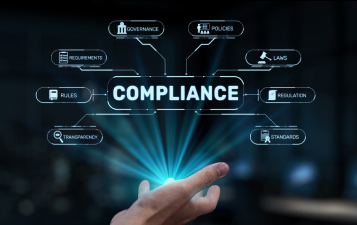
This creates friction with regulations such as GDPR, HIPAA, and ITAR, which impose strict requirements on data residency, access control, and auditability. Jurisdictional risk further complicates compliance, as data may be subject to foreign legal authority based on physical location.
NZO Cloud ensures organizations always know where their data resides and supports compliance through ISO 27001–certified security controls, simplifying audit evidence collection and long-term regulatory alignment.
Cloud Computing Data Security Challenges: The CIA Triad
The CIA Triad—confidentiality, integrity, and availability—remains the foundation of cloud data security strategy. In HPC environments, these pillars are tightly coupled: a failure in one often undermines the others. Predictable performance, accurate results, and uninterrupted access are not merely operational goals; they are trust requirements that directly affect research credibility and business outcomes.
-
Confidentiality

Confidentiality ensures that sensitive data is accessible only to authorized entities. In dedicated environments, federated control eliminates exposure to shared-tenant risks and simplifies access enforcement. Advanced encryption protects data throughout its lifecycle, while hardware-isolated key management strengthens protection of secrets. Private internet connections further restrict access paths, ensuring data remains shielded even during processing and analytics.
-
Integrity

Integrity safeguards data accuracy and trustworthiness. For scientific and engineering workloads, even minor corruption can invalidate results. High-performance, ZFS-based storage enables cryptographic validation through checksums and hashes, detecting unauthorized modification or corruption. Secure synchronization and detailed transaction logging provide a verifiable chain of custody across pipelines and integrations.
-
Availability

Availability ensures that authorized users can access resources consistently, even under adverse conditions. Security controls that degrade performance or introduce instability ultimately undermine availability. PSSC Labs achieves exceptional uptime through certified compatible hardware, redundancy, and rigorous validation—resulting in a field component failure rate of less than 1 in 10,000.
Dedicated bare-metal environments deliver predictable performance benchmarks, while load balancing and validation ensure continuous productivity throughout the lifecycle of a project.

Cloud Computing Data Security Best Practices
Safeguarding critical research and mission-critical workloads in the cloud requires more than perimeter defenses or generic security “wrappers.” For high-performance computing (HPC), AI, and regulated environments, security best practices must be embedded directly into infrastructure design, data flows, and operational processes. When implemented correctly, these practices reduce breach likelihood, shorten incident response times, simplify audits, and ensure long-running workloads complete predictably and accurately.
The following best practices focus on architectural alignment, ensuring security controls scale with performance, compliance, and operational complexity.
-
Implementing a Zero Trust Architecture
A modern cloud security strategy is anchored in Zero Trust, which replaces perimeter-based assumptions with a “never trust, always verify” model. In practice, this means every user, system, workload, and connection must continuously prove its legitimacy—regardless of where it originates.
- Identity and Access Management (IAM): Strong IAM remains foundational. Best practices include fine-grained, role-based access control (RBAC), multi-factor authentication (MFA), and strict separation between user, administrative, and service roles. In dedicated environments provided by NZO Cloud, IAM policies are applied against a single-tenant control plane, reducing identity sprawl and improving visibility into who—or what—is accessing sensitive datasets.
- Least Privilege Enforcement: The principle of least privilege limits exposure by granting only the minimum access required for each task. In HPC environments, this applies not only to users, but also to schedulers, automation pipelines, and service accounts. Pruning administrative permissions and tightly scoping access reduces blast radius if credentials are compromised.
- Just-in-Time (JIT) Access: JIT access further constrains risk by granting elevated privileges only for the duration of a specific task. Access is automatically revoked once the task completes, with all activity logged for audit and forensic review. This approach significantly reduces credential exposure windows and is especially important for organizations handling sensitive life sciences or government data.
Most importantly, Zero Trust extends beyond IAM. Effective implementations also enforce deny-by-default internal networking, workload-level authentication, and continuous validation of system behavior—not just user identity.
-
Cloud Data Protection
Protecting data at HPC scale requires layered controls that span the entire data lifecycle—from ingestion through processing, storage, and archival.
- Encryption at Rest and in Transit: Data should be encrypted both while stored and while moving across networks. PSSC Labs integrates high-performance storage platforms, including ZFS-based architectures, that support strong encryption standards such as AES-256 for data at rest and TLS for data in transit. These controls protect confidentiality without introducing performance bottlenecks that could disrupt large simulations or AI training jobs.
- Key Management and Lifecycle Control: Encryption is only as strong as its key management. Best practices include clearly defined key ownership, regular rotation, and strict access controls around key usage. Dedicated storage architectures simplify enforcement by reducing dependency on opaque, shared key services.
- Data Loss Prevention (DLP): DLP tools monitor data movement in real time to detect unauthorized transfers or unusual access patterns. In HPC environments, this is especially valuable for identifying unexpected bulk data movement during simulations or analytics workflows—often an early indicator of compromise or misuse.
- Cloud Security Posture Management (CSPM): Misconfigurations remain the most common cause of cloud security incidents. Human error drives up to 82% of cloud misconfigurations within organizations. CSPM tools continuously assess configurations against policy baselines and remediate drift. In single-tenant environments, posture management benefits from cleaner signals and fewer false positives, allowing teams to focus on genuine risk rather than background noise.
- Data Classification: Security begins with understanding data value. Classifying datasets—such as raw inputs, intermediate outputs, and final intellectual property—allows organizations to apply proportionate controls. Highly sensitive data can be isolated on dedicated resources with stricter access, encryption, and monitoring policies.
-
Cloud Data Flow and Integration
Security does not stop at storage. For AI-driven and HPC workloads, data must move securely and predictably across ingestion, processing, analysis, and archival stages.
Rather than fragmented pipelines, mature cloud environments treat data flow as a controlled lifecycle with defined security checkpoints at each stage. Centralized orchestration improves both predictability and auditability, ensuring that access policies, logging, and performance characteristics remain consistent across complex workflows.
- Automated Identity Provisioning and Deprovisioning: Integrating on-premises identity systems—such as Active Directory—with cloud IAM enables automated provisioning as roles change. Equally important is automated deprovisioning, which prevents orphaned accounts and lingering permissions when users leave or responsibilities shift.
- Cloud-to-Cloud Integration Controls: Modern workloads often rely on SaaS platforms and third-party tools accessed via APIs. While integration is necessary, it must be tightly governed. Best practices include minimizing API scopes, isolating integration workflows from core compute resources, and continuously monitoring third-party access patterns. Application compatibility should never imply unrestricted trust.
System Integration and Architectural Consistency: Bridging legacy on-premises systems with modern cloud resources introduces risk if architectures are inconsistent or poorly documented. PSSC Labs leverages decades of HPC expertise to design stable, repeatable system architectures that reduce misconfiguration risk and long-term security drift. This “white-glove” integration approach is not merely a service convenience—it is a risk-reduction mechanism that aligns performance, security, and compliance from day one.

Migration and Infrastructure Transformation
Successfully transitioning to a cloud environment requires a strategic approach that balances long-term scalability with immediate operational stability. By moving away from the unforeseen limits of traditional public cloud models, organizations can take back control of their infrastructure and achieve predictable, reliable, and repeatable performance specifically tailored to their mission-critical applications, as well as maintain a secure environment.
Cloud Migration Strategy

A robust cloud migration strategy must be built on clear objectives that address the specific performance bottlenecks often found in multi-tenant environments. Defining these objectives ensures that the transition from CapEx to OpEx—or a hybrid of both—aligns with the organization’s financial and technical requirements.
- Defining Objectives: Organizations must prioritize scalability and elastic performance for heavy workloads, such as SQL queries or AI model training.
- Cost Efficiency: NZO Cloud empowers users to achieve these goals by providing fixed subscription pricing with no surprise charges, ensuring project budgets are never exhausted by unpredictable billing or data transfer fees.
- Unified Data Management: Post-migration, centralizing datasets is critical to simplifying governance and ensuring high data quality for downstream analytics.
- Automated Disaster Recovery: Modern migration plans should include geo-redundant backups and automated failover settings to ensure business continuity in the event of potential hardware failures.
Meticulous planning and rigorous validation are the hallmarks of a successful checklist. Continuous optimization of custom-configured resources ensures that the cloud environment remains productive throughout the project’s lifetime.
Cloud Migration Services

Professional cloud migration services are essential for bridging the gap between legacy on-premises applications and modern high-performance cloud infrastructure. A structured migration framework ensures that complex workloads transition smoothly while maintaining data integrity and operational stability. Rather than a simple data transfer, effective migration should follow a rigorous lifecycle designed to align technical resources with specific business objectives.
-
Data Collection and Discovery
A successful and secure cloud migration begins with a comprehensive discovery phase. Solutions architects should deploy specialized cloud data migration tools to gather critical dependency data, typically over a minimum of one week. This phase is vital for uncovering the “actual” compute and storage needs of an organization, rather than relying on projected or historical estimates that may lead to over-provisioning or performance bottlenecks in the new environment.
Here’s a quick checklist:
- Infrastructure Inventory: Document all existing hardware, including CPU core counts, memory density, and storage volumes.
- Dependency Mapping: Utilize automated tools over a one-week period to identify how applications interact with databases and external APIs.
- Performance Benchmarking: Establish baseline metrics for “normal” operation, specifically focusing on IOPS and network latency requirements.
- Storage Tiers: Classify data into “hot” or “cold” storage needs to optimize the high-performance ZFS-based storage included in the new environment.
- Compliance Audit: Identify which datasets are subject to ITAR, HIPAA, or GDPR to determine the level of dedicated isolation required.
-
Mapping and Categorization
Once the data is collected, workloads must be classified by complexity to determine the most efficient path forward. This mapping typically distinguishes between “Lift & Shift” workloads, which can be moved to the cloud with minimal modifications, and complex reconstruction projects. The latter often requires refactoring or utilizing custom-engineered cloud instances to ensure the application can take full advantage of cloud-native performance capabilities.
-
Sprint Planning
To maintain business continuity, migrations should be executed in manageable phases, often referred to as “waves” or sprints. This systematic approach allows organizations to move critical services incrementally, ensuring that each component is stable before the next phase begins. By breaking the transition into these smaller segments, technical teams can mitigate risk and address any unforeseen integration challenges without disrupting the entire organization.
-
Validation and Handover
The final stage of a professional migration is the validation of the new environment. Before a final sign-off, technical teams must verify that all performance metrics are met and that the infrastructure is operating at peak efficiency. A comprehensive handover process also includes training the organization’s personnel, ensuring they are fully equipped to manage and optimize their new cloud ecosystem.
While these phases represent industry best practices for any migration, NZO Cloud applies a unique customer service approach to this lifecycle. By providing dedicated onboarding and security engineering teams, NZO ensures a “white glove” experience where every migration results in a turnkey production environment specifically tailored to the user’s high-performance requirements.
Data Collection Methods
Informing the design of a cloud environment requires a diverse set of data collection methods to accurately predict resource demand. By utilizing these methods, PSSC Labs can identify which server platforms are best suited for specific HPC targets.
- Primary vs. Secondary Data: Market research for cloud projects utilizes primary data from direct customer diagnostic questions and secondary data from comprehensive reports like the “State of Computational Engineering”.
- Quantitative Methods: Experts utilize time-series analysis and historical performance data to predict the precise core count, memory, and storage required for 24/7 365-day-per-year operations.
- Qualitative Methods: Utilizing questionnaires and discovery sessions helps gather essential user experience feedback from data scientists and engineers during the transition process.
- Internal vs. External Sources: Leveraging internal CRM data alongside external financial statements allows for smarter infrastructure scaling that aligns with the organization’s growth trajectory.
By utilizing these comprehensive strategies, organizations can design custom cloud instances engineered for their specific needs, ensuring they never have to settle for the limited, “off-the-shelf” options provided by traditional vendors.
Hybrid Cloud Security Solutions
As organizations increasingly integrate diverse environments, managing security becomes a multi-dimensional challenge that requires balancing performance, compliance, and cost by separating critical workloads. Hybrid cloud setups typically split workloads between private clouds and public providers, creating a complex IT landscape that requires specialized oversight to prevent gaps in protection. This architectural choice often arises from the need to balance the immense scalability of the public cloud with the rigid control and security of private, dedicated infrastructure. For industries such as aerospace, life sciences, and federal agencies, a hybrid approach allows for the segregation of crown jewel data—which requires 100% dedicated isolation—from less sensitive operational workloads. This allows organizations to maintain the performance benefits of private clouds while leveraging the cost-effectiveness of public services for non-critical tasks.
Managing the Complex IT Setup
Navigating a hybrid architecture requires more than traditional security tools; it demands a strategy that unifies disparate systems into a single, manageable framework to ensure confidentiality and integrity as traffic passes between environments. The complexity of managing multiple unique security settings across providers like AWS, Azure, and Google often leads to a “complexity burden,” where manual errors and misconfigurations become inevitable.

Effective management requires unified security tools that can adapt to each environment while matching the needs of specific workloads, such as utilizing iPaaS to ensure real-time data consistency across departments. Hybrid management platforms address these challenges through task automation, multi-cloud orchestration, and real-time performance insights.
Visibility Challenges
One of the primary risks in a hybrid model is the lack of oversight when workloads are divided between public and private clouds, as high-level visibility is inherently more complex than in a single cloud environment. Without a comprehensive view, security teams can struggle to track data movement and user activity across boundaries, leading to potential “blind spots” where threats can go unnoticed. NZO Cloud simplifies security for maximum access control by providing an integrated orchestrator that allows for simplified operation and monitoring of every connection, regardless of where the workload resides.

This observability is critical, as ephemeral resources can appear and vanish in seconds, making them nearly impossible to track with traditional monitoring tools. Continuous security monitoring provides this necessary visibility, enabling the early detection of insider threats and automated response to mitigate risks before they escalate.
The Shared Responsibility Model
Understanding the delineation of security duties is critical for hybrid success, as organizations no longer hold sole responsibility for security when utilizing third-party services. In this environment, the cloud provider typically secures the underlying infrastructure—often referred to as “security of the cloud”—while the customer remains responsible for securing the data, applications, and virtual network controls, known as “security in the cloud”.

For instance, in IaaS, the customer manages the operating system and data, while the provider handles physical hardware. PSSC Labs supports this model by offering 100% dedicated hardware platforms with no sharing of compute or storage resources, ensuring that the customer’s specific infrastructure layer is isolated and secure from the start.
Unified Security Controls
To prevent vulnerabilities, organizations must standardize guardrails across all environments to ensure a cohesive security framework regardless of where resources are hosted. Implementing identical security protocols for both public and private segments ensures that there are no weak links in the chain that could allow for lateral movement between different customer data sets.

Key strategies include implementing robust IAM with Multi-factor Authentication (MFA) and Role-based Access Control (RBAC) to ensure only authorized individuals have access to specific resources. NZO Cloud allows users to design custom cloud instances engineered for their specific security needs, ensuring that these unified controls are applied consistently without being forced into rigid, “off-the-shelf” configurations that may not support specialized compliance needs.
Centralized Logging
Effective threat detection relies on a unified view of security events to identify subtle indicators of compromise hidden beneath normal activity. Restructuring logging approaches to aggregate data from the entire hybrid estate into a centralized system—often utilizing SIEM systems—allows for real-time analysis and faster response to suspicious activity. Centralization is the only way to effectively counter advanced threat vectors like API insecurity, which remains a primary entry point for cloud security incidents and requires robust monitoring to mitigate risks.

By leveraging advanced tools like Unified Threat Management (UTM) and Endpoint Detection and Response (EDR) alongside AI-driven predictive analytics, organizations can achieve a resilient posture that automates anomaly detection and enhances incident response.
Cloud System Monitoring
Continuous cloud system monitoring is essential in a secure cloud environment. It ensures that both performance and security are maintained at optimal levels, providing the data necessary for proactive management rather than reactive firefighting.
Performance Management and Diagnostics
For engineering managers and data scientists, system performance is not just a convenience—it is a requirement for meeting project deadlines and maintaining data integrity in complex simulations.
- Real-Time Visibility: Tracking resource saturation, latency spikes, and misconfigurations in real-time is essential to preventing downtime. NZO Cloud HPC offers predictable, reliable, and repeatable performance, allowing administrators to identify patterns across CPU usage, memory utilization, and job queues through a live orchestrator interface. This prevents “Shadow IT,” where unmanaged environments bypass corporate protocols and create invisible risks.
- Cloud Application Performance Monitoring (APM): APM tools provide deep insights into user journey paths, error rates, and response times. By monitoring these metrics, organizations can identify bottlenecks within applications—such as those used for Computational Fluid Dynamics (CFD) or genomic analysis—before they impact project timelines.
- End-to-End Observability: In a distributed or multi-cloud system, observability means correlating logs, metrics, and traces across the entire architecture. This holistic view is necessary for identifying the root cause of complex issues that span multiple services, ensuring that data. Scientists can focus on their research passion rather than troubleshooting technology.
- Intelligent Resourcing: Utilizing auto-scaling allows the environment to adapt resources in line with real-time demand. This ensures that high-performance workloads have the capacity they need while NZO Cloud provides fixed subscription pricing with no surprise charges, preventing the “overspending trap” common in traditional cloud models where businesses pay for unused resources or hidden egress fees.
Uncover the latest trends in AI cloud computing and how to leverage the power of AI.
While a vital tool, HPC deployments can come with challenges. Learn how to overcome them.

Cloud Security Monitoring Solutions
Security monitoring must evolve alongside threats, utilizing advanced technologies to automate detection and response in the face of AI-powered attacks.
- Deployment of SIEM and SOAR: Utilizing SIEM and Security Orchestration, Automation, and Response (SOAR) systems allows for the aggregation of logs and the automation of predefined response plans. These tools are essential for managing “non-human” identity risks, such as over-privileged service accounts and API tokens.
- Continuous Monitoring and Adaptive Learning: Advanced solutions use AI to learn from new data patterns, reducing false positives and allowing security teams to focus on legitimate threats. This is part of the “Data Symphony,” where creation, organization, and storage are integrated for actionable insights.
- Cloud-Native vs. Agent-Based Monitoring: Selecting the right monitoring architecture is vital for DevOps workflows. Cloud-native solutions often offer high precision without adding the friction of managing individual software agents on every node, which can degrade performance in high-density computational environments.
- Incident Response Integration: Monitoring is only effective if it triggers action. Ensuring that monitoring alerts instantly activate response plans is critical for containing threats—such as zero-day exploits or credential stuffing—before they can escalate into a massive data breach.
Cloud Backup and Disaster Recovery
In a landscape where data is a primary asset, safeguarding against loss is a top priority. Effective cloud backup and disaster recovery (DR) plans ensure that operations can continue even in the face of catastrophic failure or sophisticated cyber-attacks.
- Primary Goals: A robust DR strategy protects against system failures, cyber-attacks, natural disasters, and accidental deletion. For users of PSSC Labs hardware, this resilience is built into the infrastructure through high-performance, ZFS-based storage that supports advanced encryption and native redundancy.
- Automated Scheduling: Human error is a leading cause of backup failure. Automating the scheduling of off-site backups ensures that data is consistently updated and geo-redundant without requiring constant manual intervention from overstretched IT staff.
- Rapid Restoration: Minimizing downtime is essential for maintaining business operations and meeting customer expectations. NZO Cloud HPC supports rapid restoration through optimized storage and networking, ensuring that critical research can resume quickly after an event.
Remote Accessibility: In the event that local office infrastructure is compromised, cloud-based DR ensures data can be recovered from any secure location. This is a non-negotiable requirement for organizations managing sensitive government data or critical life sciences research where 24/7/365 availability is expected.
Governance and Compliance Frameworks
Governance provides the foundation for control and oversight, ensuring that cloud usage aligns with both internal policies and external regulatory requirements.
Foundations of Control and Oversight
Establishing clear rules for resource management is the first step toward a secure and cost-effective cloud environment.
- Policy Enforcement: Organizations must establish rules for resource creation, usage, and lifecycle management. This prevents the proliferation of “Shadow IT” and ensures that every cloud node is accounted for and secured.
- Cost Optimization: Implementing budget controls and resource tagging is vital to prevent “cloud sprawl,” where unused resources drive up expenses. NZO Cloud provides fixed subscription pricing with no surprise charges, giving engineering managers total budget control and eliminating the anxiety of wild monthly spend fluctuations.
- Risk Management: Identifying and mitigating risks associated with third-party vendors and cloud adoption is a continuous process. This includes evaluating the security posture of the provider and addressing the “Larger Target” problem that we referenced in the Disadvantages of Traditional Cloud Models above, where consolidated cloud environments become prime candidates for massive data breaches.
- Compliance Alignment: Governance policies must directly support external regulatory requirements, ensuring that every cloud action is documented and auditable. NZO Cloud simplifies this by ensuring users know exactly where their data resides at all times, avoiding jurisdictional risks.
Cloud Compliance Solutions
Navigating the complex world of regulatory frameworks requires specialized tools and certified environments to protect sensitive research and organizational assets. NZO Cloud simplifies security for maximum access control by providing an environment where these compliance-sensitive workloads are managed within a secure, dedicated boundary.
| Framework | Description and Key Requirements | NZO Cloud / PSSC Labs Support |
| GDPR | Protecting personal data for EU citizens through automated data discovery, classification, and strict retention policies. | Federated data control with verified residency ensures you know where your data resides at all times. |
| HIPAA | Implementing rigid access controls, encryption, and audit logging for sensitive healthcare and genomic information. | PSSC Labs integrates ZFS-based storage supporting AES-256 encryption at rest and SSL/TLS for data in transit. |
| SOC 2 | Demonstrating security, availability, and confidentiality through continuous monitoring and independent reporting. | Live reporting, monitoring, and event logs are provided through the Cloud HPC Orchestrator. |
| FedRAMP & PCI DSS | Meeting rigorous documentation and security standards for federal agencies and payment card security. | NZO Cloud maintains a path toward FedRAMP authorization to serve as a trusted partner for government sectors. |
| ISO 27001 | The international standard for establishing and improving an Information Security Management System (ISMS). | NZO Cloud and PSSC Labs maintain certified security controls that meet this global standard. |
Governance provides the foundation for control and oversight, ensuring that cloud usage aligns with both internal policies and external regulatory requirements.
Foundations of Control and Oversight
Establishing clear rules for resource management is the first step toward a secure and cost-effective cloud environment.
- Policy Enforcement: Organizations must establish rules for resource creation, usage, and lifecycle management. This prevents the proliferation of “Shadow IT” and ensures that every cloud node is accounted for and secured.
- Cost Optimization: Implementing budget controls and resource tagging is vital to prevent “cloud sprawl,” where unused resources drive up expenses. NZO Cloud provides fixed subscription pricing with no surprise charges, giving engineering managers total budget control and eliminating the anxiety of wild monthly spend fluctuations.
- Risk Management: Identifying and mitigating risks associated with third-party vendors and cloud adoption is a continuous process. This includes evaluating the security posture of the provider and addressing the “Larger Target” problem that we referenced in the Disadvantages of Traditional Cloud Models above, where consolidated cloud environments become prime candidates for massive data breaches.
- Compliance Alignment: Governance policies must directly support external regulatory requirements, ensuring that every cloud action is documented and auditable. NZO Cloud simplifies this by ensuring users know exactly where their data resides at all times, avoiding jurisdictional risks.
Cloud Compliance Solutions
Navigating the complex world of regulatory frameworks requires specialized tools and certified environments to protect sensitive research and organizational assets. NZO Cloud simplifies security for maximum access control by providing an environment where these compliance-sensitive workloads are managed within a secure, dedicated boundary.
| Framework | Description and Key Requirements | NZO Cloud / PSSC Labs Support |
| GDPR | Protecting personal data for EU citizens through automated data discovery, classification, and strict retention policies. | Federated data control with verified residency ensures you know where your data resides at all times. |
| HIPAA | Implementing rigid access controls, encryption, and audit logging for sensitive healthcare and genomic information. | PSSC Labs integrates ZFS-based storage supporting AES-256 encryption at rest and SSL/TLS for data in transit. |
| SOC 2 | Demonstrating security, availability, and confidentiality through continuous monitoring and independent reporting. | Live reporting, monitoring, and event logs are provided through the Cloud HPC Orchestrator. |
| FedRAMP & PCI DSS | Meeting rigorous documentation and security standards for federal agencies and payment card security. | NZO Cloud maintains a path toward FedRAMP authorization to serve as a trusted partner for government sectors. |
| ISO 27001 | The international standard for establishing and improving an Information Security Management System (ISMS). | NZO Cloud and PSSC Labs maintain certified security controls that meet this global standard. |
ISO 27001 Compliance
As the international standard for information security, ISO 27001 demonstrates a commitment to excellence, credibility, and competitiveness in the global marketplace. For organizations managing high-performance computing (HPC) workloads, this certification ensures that data protection is handled according to a rigorous federal security standard.
- Information Security Management System (ISMS): Establishing an ISMS provides a comprehensive framework for managing security risks effectively across the entire organization. This structured approach allows NZO Cloud to identify, assess, and mitigate risks associated with both hardware components and cloud-based resources.
- Continuous Improvement: Maintaining ISO 27001 certification is not a one-time event; it requires regular internal and external audits and consistent process updates to ensure that security measures evolve alongside the threat landscape. This proactive stance ensures that your dedicated environment remains productive and protected for the lifetime of the project.
- Operational Efficiency: Adopting standardized, well-documented procedures not only improves the overall security posture but also significantly reduces long-term operational costs by eliminating repetitive or manual tasks and preventing “cloud sprawl”. NZO Cloud simplifies security for maximum access control by providing an environment where these standardized controls are baked directly into the high-performance architecture.
By aligning with the core principles of ISO 27001, organizations can move beyond generic security “wrappers” and utilize a cloud environment specifically engineered for the technical and legal requirements of 2026 and beyond.
ISO 27001 Compliance
As the international standard for information security, ISO 27001 demonstrates a commitment to excellence, credibility, and competitiveness in the global marketplace. For organizations managing high-performance computing (HPC) workloads, this certification ensures that data protection is handled according to a rigorous federal security standard.
- Information Security Management System (ISMS): Establishing an ISMS provides a comprehensive framework for managing security risks effectively across the entire organization. This structured approach allows NZO Cloud to identify, assess, and mitigate risks associated with both hardware components and cloud-based resources.
- Continuous Improvement: Maintaining ISO 27001 certification is not a one-time event; it requires regular internal and external audits and consistent process updates to ensure that security measures evolve alongside the threat landscape. This proactive stance ensures that your dedicated environment remains productive and protected for the lifetime of the project.
- Operational Efficiency: Adopting standardized, well-documented procedures not only improves the overall security posture but also significantly reduces long-term operational costs by eliminating repetitive or manual tasks and preventing “cloud sprawl”. NZO Cloud simplifies security for maximum access control by providing an environment where these standardized controls are baked directly into the high-performance architecture.
By aligning with the core principles of ISO 27001, organizations can move beyond generic security “wrappers” and utilize a cloud environment specifically engineered for the technical and legal requirements of 2026 and beyond.
Cloud Integration Platforms and Unified Ecosystems
A successful cloud strategy requires more than just high-performance storage; it demands that the creation, organization, and movement of information are integrated into a single, unified flow. For AI-driven insights to be truly actionable, the data flow across the entire ecosystem must be as secure and efficient as the underlying hardware. Modern organizations must connect disparate applications into a cohesive environment that supports both legacy workflows and cutting-edge innovations. NZO Cloud HPC offers predictable, reliable, and repeatable performance, providing fixed subscription pricing with no surprise charges to ensure these complex integrations remain within budget.
Breaking Down Silos
Traditional IT infrastructures often suffer from fragmented data, where critical information is trapped within department-specific applications. Utilizing an iPaaS allows organizations to break down these silos by ensuring real-time data consistency across all departments.

This is particularly vital for data scientists who require accurate, synchronized datasets to extract meaningful analytics and train machine learning models. By automating user provisioning—such as syncing HRIS solutions with cloud-native IAM—businesses can streamline security and prevent “permission creep” as employee roles change.
Low-code vs. Enterprise Tools
Selecting the right integration tools depends heavily on the scale and technical complexity of the organization’s workloads.

- Low-code Tools: Platforms like Zapier are often sufficient for simple, high-level automations that connect common office applications.
- Enterprise Solutions: For massive, high-performance datasets and complex B2B integrations, enterprise-grade tools like MuleSoft or Informatica are required to maintain the necessary throughput and data integrity.
Regardless of the tool selected, users can design custom cloud instances engineered for their needs, ensuring the integration layer is optimized for their specific HPC targets.
API-led Integration
A robust architecture relies on API-led integration, allowing disparate applications to trigger automated workflows based on specific system events. This approach creates a responsive, agile environment where data flows seamlessly between software suites like Ansys, Star CCM, and TensorFlow.

However, insecure or unmanaged APIs have become a primary entry point for attackers, accounting for nearly 49% of all cloud security incidents. To mitigate this risk, NZO Cloud simplifies security for maximum access control, offering dedicated computing resources and certified application compatibility that prevents integrations from becoming security bottlenecks.
Hybrid Integration Strategies
For many organizations, the path to modernization is gradual rather than immediate. Hybrid integration strategies involve bridging on-premises legacy applications with modern, dedicated cloud resources to maintain business continuity during transitions.

PSSC Labs leverages over 25 years of cluster engineering expertise to facilitate these connections, integrating legacy hardware with high-performance, ZFS-based storage in the cloud. By utilizing an agile development process, PSSC Labs can custom-configure hardware from the component level up, allowing users to specify the exact processors, memory, and high-speed networking required to bridge their unique IT environments. This “white glove” approach ensures that even the most complex hybrid architectures achieve the predictable, reliable performance necessary for mission-critical project success.
Conclusion: Security Requires Control by Design
Cloud security failures rarely stem from a lack of tools. They stem from a lack of control.
As cloud environments grow more complex—spanning hybrid architectures, AI-driven workflows, and massive data pipelines—the risks facing organizations become structural rather than episodic. Misconfigurations compound over time. Performance variability undermines availability. Cost volatility erodes security discipline. In shared, multi-tenant environments, even well-resourced teams are forced to secure workloads on infrastructure they cannot fully see, govern, or isolate.
For organizations running high-performance computing, AI/ML, scientific research, or regulated workloads, this model is no longer sufficient. Security must be engineered into the environment itself—through dedicated resources, transparent access controls, predictable performance, and governance models that align responsibility with authority.
NZO Cloud was built around this principle. By combining 100% dedicated infrastructure from PSSC Labs with fixed subscription pricing, customizable system design, and simplified security controls, NZO Cloud enables organizations to regain control over the variables that matter most: performance, cost, access, and compliance. Security is no longer something you bolt on or constantly chase—it becomes a stable property of the environment.
If your current cloud platform feels unpredictable, opaque, or increasingly difficult to secure, it may not be a tooling problem. It may be an architectural one.
Take the next step. Explore how NZO Cloud delivers total control through dedicated infrastructure, predictable pricing, and security designed for high-stakes workloads.
Start a 7-day free trial or speak directly with a PSSC Labs HPC security expert to evaluate whether a single-tenant cloud model is the right foundation for your organization’s future.