


HPC: Architecture, Cloud, GPUs & Use Cases
High-Performance Computing (HPC) refers to the use of powerful computing systems comprised of processors, accelerators, memory, and interconnects, to solve large-scale computational problems that exceed the capabilities of standard IT infrastructure. Traditionally associated with national laboratories and supercomputers, HPC has long been a cornerstone of scientific discovery, advanced engineering, and data-intensive modeling. By running billions to trillions of calculations per second, HPC enables breakthroughs in industries and sectors such as genomics, materials science, weather forecasting, as well as countless others.
The data-intensive environment we find ourselves in now demands HPC more than ever. The rise of artificial intelligence (especially generative AI) has brought unprecedented demand for parallel processing to train large models. Scientific research relies on HPC to simulate physical systems at scales that were once unimaginable, from molecular dynamics to astrophysics. In fact, the COVID-19 vaccine was developed and made available to the public in 350 days, a triumph for science that helped save countless lives. Financial services, on the other hand, harness HPC for real-time risk assessment and fraud detection, while digital engineering and manufacturing deploy HPC-powered digital twins to accelerate product design and innovation. In short, HPC is no longer a niche—it is a critical driver of competitiveness, innovation, and resilience across industries.
HPC in general, however, has changed dramatically. While traditional on-premises supercomputers offered unmatched control and performance, they were capital-intensive, inflexible, and limited in scalability. The advent of cloud computing architecture has shifted the model, allowing organizations to expand beyond physical clusters. Today, HPC in the cloud provides elastic scaling, predictable costs, and reproducibility—making it possible for enterprises, researchers, and even small teams to tap into computational resources that once required multimillion-dollar infrastructure.
This article explores how HPC has evolved in the cloud era, examining architectures, cost considerations, hardware foundations, management layers, use cases, and future directions. Along the way, it highlights the role of specialized HPC providers (in contrast to the hyperscalers) who are leading the charge in delivering scalable, reliable, and cost-predictable cloud HPC solutions, such as workstations.


HPC in the Cloud Era
HPC is entering a new phase where agility and scalability matter as much as raw processing power. Once confined to specialized, on-premises clusters, HPC now leverages the elasticity of the cloud to handle diverse and dynamic workloads. This shift fundamentally changes where computation happens and transforms how resources are architected, orchestrated, and consumed. In this section, we’ll explore how cloud-native infrastructure, hybrid strategies, and intelligent orchestration are redefining the future of HPC.
Cloud Computing Architecture for HPC
HPC as a whole has undergone a profound transformation in the past decade. What was once the exclusive domain of on-premises supercomputers and tightly coupled clusters has expanded into the realm of cloud-native, hybrid, and multi-cloud architectures. This evolution reflects not just advances in cloud technology, but also the growing demand from researchers, engineers, and enterprises to combine scalability, cost predictability, and reproducibility into their HPC environments.
HPC in the cloud requires specialized architecture. Unlike general-purpose cloud workloads, HPC jobs involve massively parallel computations, low-latency interconnects, and high-throughput storage systems. Providers such as PSSC Labs address these requirements by offering dedicated, bare-metal HPC instances, avoiding virtualization bottlenecks and noisy neighbor interference that often plague mainstream providers like AWS, Azure, or GCP.
With predictable performance, customizable system design, and simplified security, organizations can now deploy HPC in a way that marries the flexibility of the cloud with the reliability of traditional clusters.
The Shift from Traditional HPC Clusters to Hybrid Models
Traditionally, HPC environments were deployed as massive, on-premises clusters. These systems were capital-intensive, designed to serve peak demand, and managed by in-house IT staff. While they offered maximum control, they came with inherent challenges: high upfront capital expenditure (CapEx), complex maintenance, limited elasticity, and lifecycle refresh costs.
The hybrid cloud model has emerged as the natural successor. Instead of overprovisioning clusters that sit idle for much of the year, enterprises now run steady-state workloads on-premises while “bursting” into the cloud during periods of peak demand. This model combines cost efficiency with agility, enabling organizations to:
- Maintain compliance and data sovereignty by keeping sensitive data on-premises.
- Access virtually unlimited cloud resources during simulations, AI/ML training runs, or data-intensive analytics.
- Aligning cloud spending with actual usage instead of overinvesting in local hardware can reduce total cost of ownership (TCO).
By blending the strengths of both environments, hybrid HPC architectures unlock agility without sacrificing control.
Hybrid Cloud Architecture vs. Multi-Cloud Management Platforms
While “hybrid” and “multi-cloud” are often used interchangeably, they represent distinct architectural philosophies. Hybrid HPC focuses on the integration of on-premises clusters with a single public cloud provider. Multi-cloud management platforms, by contrast, aim to abstract and orchestrate workloads across multiple providers simultaneously.
Here’s a side-by-side comparison:
| Feature/Focus | Hybrid Cloud Architecture | Multi-Cloud Management Platforms |
| Primary Goal | Extend on-prem resources to a single cloud | Orchestrate workloads across multiple cloud vendors |
| Use Case | Cloud bursting, backup, compliance-sensitive HPC | Avoid vendor lock-in, optimize cost/performance |
| Complexity | Moderate (integration with one provider) | High (cross-cloud APIs, orchestration overhead) |
| Cost Control | Easier to predict, especially with fixed-pricing clouds like NZO/PSSC Labs | Harder—requires third-party FinOps or governance tooling |
| Security Posture | Consistent with on-prem strategy | Fragmented; must align across multiple environments |
| Best Fit | Enterprises with a strong on-prem HPC presence | Enterprises with distributed workloads across vendors |
Hybrid cloud models are typically a stepping stone, while multi-cloud management is a long-term strategic choice for organizations that must maximize resilience and avoid single-vendor dependency.
Role of Cloud Configuration Management in Ensuring Efficiency and Reproducibility
Reproducibility is the lifeblood of HPC research and engineering. Without consistent results, models lose their scientific and operational value. Cloud configuration management tools—whether native (Terraform, Ansible, CloudFormation) or HPC-specific (Cloud HPC Orchestrator)—ensure:
- Immutable environments: Jobs always run on the same configuration of CPU, memory, GPU, and libraries.
- Version-controlled infrastructure: HPC environments can be redeployed with identical parameters, avoiding drift.
- Performance efficiency: Automated scaling rules align resources with workload needs, reducing waste and costs.
- Faster onboarding: Engineers and researchers can self-service HPC environments without waiting for IT intervention.
This is where providers like PSSC Labs differentiate with their fixed-cost model and bare-metal resources, allowing researchers to experiment without penalty.
Instances and Resources

In cloud computing, an “instance” refers to a virtualized or bare-metal compute resource. Instances are defined by their CPU, memory, storage, and network capabilities, and are the fundamental building blocks for running workloads in the cloud.
While AWS, Azure, and Google popularized the “slice-based” model—selling fractionalized servers as instances—HPC-focused providers like PSSC Labs offer dedicated bare-metal instances optimized for performance-critical workloads.
Best Options for Scalable Compute Resources in Cloud

Selecting the right instance type is one of the most important decisions in running HPC workloads in the cloud. The wrong choice can either drive up costs dramatically or leave expensive hardware underutilized. In HPC, where jobs can run for days across thousands of nodes, understanding the nuances of instance economics, performance characteristics, and availability is critical.
Cloud compute costs are primarily driven by the time workloads spend running on instances, with billing typically calculated per second or per hour. For GPU-accelerated instances, prices have fallen in recent years, but they still represent a significant investment when scaled across thousands of nodes. For example, hyperscalers now price their top-end accelerators—such as systems featuring NVIDIA H100 GPUs—in the range of a few dollars per GPU per hour or tens of dollars per hour for multi-GPU instances, depending on the region and purchasing model.
Long-duration HPC jobs can quickly translate these hourly costs into tens of thousands of dollars per month. Reserved or long-term commitments can reduce costs substantially—often 50–70% lower than on-demand rates—making them a good fit for steady-state HPC workloads. For organizations willing to accept risk, spot or preemptible instances can be even more cost-effective, sometimes discounted by up to 90%, though they carry the possibility of sudden termination. The actual price a team pays depends on several factors: the instance type selected, the number of accelerators, regional differences, and whether resources are purchased on-demand, reserved, or through a market-based spot model.
By contrast, PSSC Labs offers fixed monthly pricing for dedicated HPC instances, bundling compute, storage, and interconnects into a single package. This model avoids the volatility of hyperscaler billing and ensures 2–3x the compute power for the same budget.
Cloud Instance Models for HPC Workloads
| Instance Type | Pricing Model | Strengths | Weaknesses | Best Fit Workloads |
| Elastic Scaling (On-Demand) | Pay-as-you-go, billed per second or hour | Maximum flexibility; instant cluster spin-up | Highest per-hour cost; difficult to predict at scale | Short-term projects, rapid prototyping, burst capacity |
| Reserved Instances | 1–3 year commitment; discounted hourly rate | Predictable cost; cheaper for steady, long-term use | Reduced flexibility; requires upfront planning | Steady-state HPC jobs, long-term research pipelines |
| Spot / Preemptible | Variable, market-based discounts (often 70–90%) | Extremely cost-effective; good for non-critical runs | Can be interrupted anytime; unreliable for urgent work | Monte Carlo methods, parameter sweeps, regression tests |
| HPC-Dedicated (Bare-Metal) | Premium cost in hyperscalers; predictable with specialized providers | Maximum performance; no virtualization overhead; InfiniBand/NVLink interconnects | Premium pricing on hyperscalers; limited configurations | CFD, FEA, AI/ML training, genomics, weather modeling |
| PSSC Labs Dedicated HPC Cloud | Fixed monthly subscription with bundled storage & interconnect | 2–3× more compute for same budget; predictable; customizable | Smaller global footprint than hyperscalers | Enterprise-scale HPC requiring reproducibility and predictable spend |
Decision Matrix: Choosing the Right HPC Cloud Instance
-
Is your workload predictable or unpredictable?
- Predictable (steady-state, always running): → Go to Step 2
- Unpredictable (spikes, bursty demand): → Use Elastic On-Demand Instances for flexibility, or Spot Instances if fault-tolerant
-
Do you need the lowest possible cost over time?
- Yes, and workload is long-term: → Choose Reserved Instances (commitment model with significant discounts)
- Yes, but workload can tolerate interruptions: → Choose Spot / Preemptible Instances for maximum savings
- No, you prioritize flexibility: → Stay with On-Demand Instances
-
Is performance critical with little tolerance for virtualization overhead?
- Yes: → Deploy HPC-Dedicated Bare-Metal Instances for maximum throughput and low latency
- No, performance needs are moderate: → Reserved or On-Demand Instances will suffice
-
Do you need fixed, predictable monthly costs and custom configurations?
- Yes: → Select a specialized provider like PSSC Labs HPC Cloud with fixed subscription pricing and dedicated resources
- No: → Standard hyperscaler models (on-demand, reserved, spot) will work
Cloud CPU and NVIDIA Accelerator Workloads
Modern HPC is increasingly GPU-driven. CPUs remain essential for orchestration, data preprocessing, and sequential workloads, but GPUs deliver exponential performance gains in AI/ML training, CFD simulations, and genomics.
NVIDIA’s HPC accelerators, such as the H100, H200, and the emerging GH200/GB200 Grace Hopper and Grace Blackwell architectures, set the standard for compute density. With support for CUDA, cuDNN, and advanced parallel processing, these GPUs enable workloads such as:
- Deep learning model training with PyTorch and TensorFlow.
- Computational chemistry simulations with Gaussian and GROMACS.
- Physics and weather modeling with high-bandwidth memory (HBM) demands.
Providers like PSSC Labs integrate these accelerators into their instance design, ensuring organizations can leverage the latest NVIDIA architectures without being locked into outdated hardware, a common issue with hyperscalers.

Cost Considerations in HPC Cloud
Running HPC in the cloud promises agility and scale, but those benefits often come at a price. Unlike traditional clusters with fixed capital expenditures, cloud HPC involves complex usage-based billing models where compute, storage, and data movement all contribute to the total bill. Understanding these costs—and building strategies to control them—is critical for ensuring that cloud-based HPC delivers not only performance but also sustainable economics.
Cost of Cloud Computing for HPC
Cloud HPC pricing models differ from general-purpose cloud services. While hyperscalers like AWS, Azure, and Google Cloud provide convenient per-hour or per-second billing, HPC workloads consume resources at a scale that makes small cost differences compound rapidly. A single simulation may require thousands of cores or multiple high-end GPUs running continuously for days, meaning cost overruns can escalate quickly.
A study from 2017 showed that nearly half of all cloud migration projects fail, fall behind schedule, or are put on hold due to going over budget. This trend has continued or even gotten worse over the years, with various reports from 2019 showing a 74–90% failure rate for cloud projects—a concerningly high number. A more recent report from McKinsey, conducted in 2024, shows that 75% of cloud projects went over budget, highlighting that the trend continues.
So why do cloud projects consistently go over budget? There are a variety of reasons:
- Insufficient planning and underestimating of time, costs, and effort required for successfully completing the project.
- Poor cost management, including effectively monitoring and optimizing cloud spending. A big contributor to this problem is the complex pricing models of big cloud providers, which often leads to hidden costs and unexpected expenses.
- Organizations allocating too much infrastructure, like virtual servers or instances, beyond their actual needs is another common cause of cost overruns.
- Organizations having a lack of skilled individuals available to effectively manage and optimize cloud resources.
- Various unforeseen challenges, such as technical hurdles, security concerns, compliance issues, and a lack of ability to handle them, often increase project costs.
Avoiding cost overruns means understanding why they happen and making plans to mitigate them as much as possible.
Understanding Cloud-Based Server Cost

At its simplest, a cloud server (or instance) is a rented portion of compute capacity defined by CPU, memory, storage, and sometimes GPU resources. But HPC workloads make server economics more complex than traditional enterprise applications. Cloud server costs are driven by multiple dimensions:
- Compute Time: Billed by the hour or second, depending on provider. HPC jobs that run continuously for days or weeks multiply costs quickly, especially on GPU-heavy instances. For example, AWS has recently reduced pricing for its P5 instances featuring NVIDIA H100 GPUs: in some regions, the rate is around $4.92 per accelerator per hour, or approximately $39.33 per hour for a full instance with 8 H100s. Actual pricing varies by instance type, region, and whether the resources are reserved in advance. Even at these lower rates, long-duration HPC simulations can still generate tens of thousands of dollars in monthly compute costs.
- Memory and Storage: High-performance workloads often require terabytes of RAM and parallel file systems. Hyperscalers charge for every gigabyte, with storage typically billed monthly at rates between $0.10–$0.125 per GB for SSD-backed volumes. Long-term storage can add thousands of dollars per month.
- Data Movement: Uploading data (ingress) is usually free, but moving results out of the cloud (egress) can cost around $0.05–$0.12 per GB depending on the hyperscaler. For HPC datasets in the terabyte or petabyte range, this often becomes the single largest hidden cost.
- Licensing: Many HPC applications (ANSYS Fluent, LS-DYNA, MATLAB, Gaussian) require commercial licenses. Hyperscalers frequently charge extra for license hosting, adding further cost layers. By contrast, PSSC Labs bundles licensing support into our offerings, reducing complexity and spend.
- Idle Resource Costs: With hyperscalers, reserved or reserved-capacity nodes still accrue charges even if jobs aren’t running. This inefficiency often leads to significant waste for organizations without mature workload scheduling.
Comparing Cost Models: Hyperscalers vs. HPC-Focused Providers
| Cost Component | Hyperscale Cloud (AWS/Azure/GCP) | HPC-Dedicated Clouds (PSSC Labs) | Compute Pricing |
| Per-hour billing (volatile, scales fast) | Fixed monthly subscription with predictable spend | GPU Costs | $40–$50/hr per H100; >$100/hr for multi-GPU nodes |
| Included in custom instance design, no hourly premium | Storage | $0.10–$0.25 per GB/month (SSD), plus archival tiers | High-performance storage included (100TB baseline) |
| Data Transfer | $0.05–$0.12 per GB egress fees | Zero egress fees; bundled with compute | Licensing |
| Extra charge for application hosting | Licensing support bundled | Resource Sharing | Virtualized, potential noisy-neighbor impact |
| Bare-metal, 100% dedicated | Budget Predictability | Variable, prone to overrun | Guaranteed fixed spend |
AWS Transfer Fees
One of the most underestimated costs in HPC cloud is data transfer, particularly with providers like AWS. While uploading data is often free, downloading or moving results outside of the cloud incurs egress fees that can dwarf the actual compute costs.

For HPC workloads where output datasets can reach terabytes or even petabytes, these AWS transfer fees represent a major budget risk. Consider computational chemistry or climate modeling: storing interim results and moving them across platforms can generate thousands of dollars in unexpected monthly charges.
This is why HPC-focused providers such as PSSC Labs eliminate transfer fees entirely, bundling storage and compute into a fixed subscription. By doing so, they restore transparency and make it easier for organizations—particularly research groups with grant funding—to forecast and allocate budgets effectively.
Cloud TCO
TCO in cloud HPC goes beyond just the hourly compute rate. To understand the true economics, organizations must factor in:
- Compute utilization efficiency: Are jobs running on the right-sized nodes, or are cores left idle due to misconfiguration?
- Licensing costs: Many HPC applications require expensive commercial licenses, which can double overall spend if not optimized.
- Data movement: As noted above, egress charges can silently inflate TCO.
- Staffing and expertise: Managing cloud HPC requires specialized knowledge; without orchestration and automation, labor costs climb.
- Lifecycle refresh vs. OpEx: Unlike on-prem clusters that require major refreshes every 4–5 years, cloud HPC transforms CapEx into operating expenses, but recurring spend can exceed the equivalent hardware cost over time.
For example, an organization running $10,000/month in AWS HPC instances might find that PSSC Labs delivers 2–3x more compute for the same budget, thanks to our fixed pricing and lack of egress penalties.
Ultimately, evaluating TCO is about aligning financial models with workload patterns. For organizations running constant, predictable HPC jobs, fixed-pricing platforms often prove far more cost-effective than elastic on-demand clouds.
Approaches to Cloud Cost Optimization and Cloud Cost Management
Cost optimization in cloud HPC and good overall management of costs requires a combination of technical and financial strategies to be successful.
- Instance selection and right-sizing: Ensure workloads run on nodes that match CPU/GPU and memory requirements.
- Job scheduling efficiency: Use orchestration tools like Slurm or Cloud HPC Orchestrator to maximize utilization of available cores.
- Spot or preemptible nodes: For fault-tolerant jobs, these can drastically reduce costs—though with risk of interruption.
- Data lifecycle management: Move cold datasets to lower-cost storage tiers, while keeping active data on high-performance parallel file systems.
- Predictable pricing models: Partner with providers like PSSC Labs, which offer fixed-cost, bare-metal HPC clouds that eliminate surprise fees.
With the right combination of governance, automation, and vendor selection, HPC users can achieve sustainable economics without compromising performance.

HPC Hardware Foundations
While software orchestration and cost governance are essential for HPC in the cloud, performance ultimately rests on the hardware foundation. The interplay of GPUs, CPUs, and storage subsystems defines not only computational throughput but also the scalability and efficiency of the entire HPC architecture. The cloud era has democratized access to cutting-edge accelerators and interconnects, but it has also made hardware decisions more strategic than ever.
Role of GPUs in Accelerated Computing for HPC

Graphics Processing Units (GPUs) have fundamentally reshaped the trajectory of HPC. While CPUs remain critical for orchestration, control, and sequential workloads, GPUs bring an entirely different paradigm: massive parallelism. With thousands of cores executing operations simultaneously, GPUs deliver exponential speedups on problems that can be decomposed into parallel tasks.
This makes GPUs indispensable in HPC workloads that require high throughput and scalability:
- AI/ML Training and Inference: Training large neural networks can involve billions of parameters and trillions of operations. GPUs, with their Tensor Cores and high-bandwidth memory (HBM), enable models like GPT, BERT, or climate-focused AI models to train in days rather than months. GPUs provide the throughput necessary for real-time responsiveness for inference at scale—such as natural language processing, image recognition, or autonomous systems.
- Computational Fluid Dynamics (CFD) and Finite Element Analysis (FEA): Simulations in aerospace, automotive, and materials science often involve solving millions of equations in parallel. GPUs accelerate iterative solvers and mesh computations, drastically cutting down the time-to-solution for product design or safety validation.
- Genomics and Life Sciences: Sequencing the human genome involves aligning billions of short DNA reads. Pattern-matching algorithms map perfectly onto GPU architectures, making GPUs essential for genomics, proteomics, and epidemiological modeling. GPU-accelerated platforms such as NVIDIA Clara and Parabricks have reduced genome analysis pipelines from days to under an hour.
- Weather and Climate Modeling: Modeling global climate requires processing petabytes of atmospheric, oceanic, and land data. GPUs allow high-resolution grid-based models to run in real time, producing forecasts with unprecedented accuracy. This is critical not just for meteorology but for industries like energy, logistics, and disaster management.
Why GPUs Outperform CPUs in HPC
- Core Count and Throughput: A modern CPU may have up to 128 cores, while a single GPU like the NVIDIA H100 features over 16,000 CUDA cores, each capable of handling floating-point operations concurrently.
- Specialized Hardware: GPU architectures now integrate Tensor Cores, Ray-Tracing Cores, and Matrix Multipliers, all designed for linear algebra and deep learning workloads.
- Memory Bandwidth: GPUs leverage HBM2e and HBM3e memory, delivering bandwidth in the terabyte-per-second range, eliminating bottlenecks in large dataset processing.
- Energy Efficiency: When measured in FLOPs per watt, GPUs significantly outperform CPUs, making them more sustainable for exascale computing.
GPUs as the Performance Bottleneck (or Enabler)
In modern HPC clusters, GPUs often determine overall system capability. A simulation or AI training workload may scale across thousands of CPU cores, but if the GPUs are limited in number, outdated in architecture, or poorly utilized, the cluster’s performance stalls. Conversely, clusters with the latest accelerators (such as NVIDIA H100/H200, AMD Instinct MI300X, or Intel Gaudi 3) can reduce workloads that once took weeks of wall-clock time into mere hours, unlocking faster scientific discovery and product development.
This dynamic makes GPU adoption not just a matter of performance, but of strategic competitiveness. For industries like pharmaceuticals, aerospace, and financial modeling, the difference between completing a workload in hours versus weeks directly affects innovation timelines and business outcomes.
NVIDIA Blackwell GPU and NVIDIA Accelerator Technologies for HPC Workloads
NVIDIA continues to dominate the HPC accelerator space. The recent NVIDIA Blackwell architecture represents a generational leap for scientific computing. Following the H100 and H200, Blackwell GPUs offer:
- Next-gen Tensor Cores for faster AI and mixed-precision workloads.
- HBM3e memory with multi-terabyte-per-second bandwidth to eliminate memory bottlenecks.
- NVLink 5.0 for low-latency, high-throughput GPU-to-GPU communication across nodes.
- Advanced MIG (Multi-Instance GPU) partitioning for workload isolation.
Together, these features make Blackwell accelerators particularly well-suited for multi-physics simulations, AI-driven HPC workflows, and hybrid workloads that blend ML with traditional numerical methods.
AMD GPU Advancements for Parallel Workloads
While NVIDIA leads, AMD has made significant strides with its Instinct MI300X and MI300A accelerators. These GPUs feature:
- 3D-stacked chiplet architecture, integrating CPU and GPU memory on a single package for reduced latency.
- Infinity Fabric interconnect, enabling high-bandwidth links across GPUs and CPUs.
- Strong performance in FP64 double-precision operations, critical for scientific workloads.
- Native support for open-source ROCm (Radeon Open Compute), an alternative to CUDA.
AMD GPUs are gaining traction in HPC environments where cost efficiency and open frameworks are valued—particularly in government, academic, and exascale computing projects.
Intel’s Entry into the GPU Accelerator Space
Intel is actively expanding its GPU and accelerator portfolio to bolster its position in the HPC and AI markets. At Computex 2025, the company unveiled multiple new products aimed at both professional workstations and scalable AI inference applications.
Intel Arc Pro B-Series (Battlemage Architecture)

Intel recently introduced two new professional-grade GPUs—the Intel Arc Pro B60 (24 GB VRAM) and Arc Pro B50 (16 GB VRAM)—based on its XE-2 “Battlemage” architecture. Equipped with Xe Matrix Extensions (XMX) AI cores and ray-tracing units, these cards cater to demanding AI inference and workstation workloads like architecture, engineering, and construction. They support multi-GPU scalability and ship with ISV-certified drivers. The B60 began sampling from June 2025, while the B50 was made available in July 2025.
Intel Gaudi 3 AI Accelerators
Complementing the Arc Pro line, Intel also revealed its Gaudi 3 AI accelerators. These are available in both PCIe add-in card form and rack-scale configurations—the latter supporting up to 64 accelerators per rack and featuring 8.2 TB of high-bandwidth memory and liquid cooling for maximum performance and efficient TCO.
Project Battlematrix & LLM Scaler 1.0
Intel’s Project Battlematrix allows integration of up to eight Arc Pro GPUs with Xeon CPUs in turnkey workstations offering up to 192 GB of VRAM. To optimize AI workloads, Intel released LLM Scaler 1.0—a Linux-based software stack that enhances inference workflows with features like speculative decoding, torch.compile support, data parallelism, and layer-by-layer quantization. This update delivers up to 4.2× faster large language model processing and improved memory efficiency, with broader support expected by Q4 2025.
Programming Ecosystem: Intel oneAPI
Intel continues to support heterogeneous computing through its oneAPI ecosystem, offering a unified programming model across CPUs, GPUs, and accelerators. This enables developers to maintain singlular codebases rather than juggling vendor-specific SDKs, which is crucial for scalable HPC workflows.
CPU and Compute Node Design

While GPUs dominate headlines, CPUs remain the backbone of HPC clusters. They orchestrate workloads, handle system-level operations, and manage data pipelines. Their role is especially critical in cloud HPC, where efficient CPU utilization determines whether accelerators and storage can operate at peak performance.
Key Roles of CPUs in HPC Nodes:
- Orchestration and Scheduling: CPUs manage MPI processes, job distribution, and communication between nodes.
- Pre- and Post-Processing: Many simulations, such as CFD or molecular dynamics, require heavy data preparation before GPU kernels can be executed and results aggregated afterward.
- Sequential Workloads: Not all HPC workloads parallelize well. CPUs are more effective for Monte Carlo simulations, financial modeling, and serial components of hybrid workloads.
- Memory-Intensive Applications: Some applications, such as genomics assembly or in-memory databases, require terabytes of RAM, favoring CPU-only nodes with expanded memory footprints.
Cloud Compute Node Types:
- CPU-Only Nodes: Common in workloads where GPU acceleration offers minimal benefit (e.g., large parameter sweeps, Monte Carlo methods, graph analytics).
- GPU-Accelerated Nodes: Feature one or more GPUs tightly coupled with CPUs to support hybrid workloads.
- High-Memory Nodes: Equipped with terabytes of RAM, enabling in-memory computations for genome sequencing or massive graph databases.
- Specialized Nodes: Some clouds now provide FPGA- or AI-accelerator-enhanced compute nodes, tailored to narrow but critical use cases.
Providers like PSSC Labs excel in tailoring these node designs. Instead of forcing customers into rigid templates, they engineer compute nodes with custom CPU-to-GPU ratios, memory configurations, and interconnects to match the exact workload profile. This customization minimizes wasted resources and aligns directly with application requirements.
Architectural Considerations in Building Balanced Clusters
Building an HPC cluster—whether on-premises or in the cloud—is about balance. A single bottleneck in CPU, GPU, memory, or networking can throttle the entire system. Achieving balance requires careful attention to system architecture at every layer.
| Category | Key Options / Technologies | Insights & Workload Implications |
| Processor Selection | – Intel Xeon (Sapphire/Emerald Rapids) – AMD EPYC (Genoa, Bergamo) – Arm (Ampere, AWS Graviton, Fujitsu A64FX) | Xeon: broad compatibility, strong vector performance. EPYC: up to 128 cores/socket, ideal for highly parallel CPU-only workloads. Arm: efficient alternative with SVE support, increasingly viable for AI/HPC. |
| GPU-to-CPU Ratios | – 1:1 or 1:2 (Balanced) – 1:4 or 1:8 (GPU-heavy) – CPU-heavy nodes (few/no GPUs) | 1:1–1:2: Good for hybrid HPC (e.g., CFD, genomics). 1:4–1:8: Optimized for AI/ML training, inference. CPU-heavy: Monte Carlo, genomics pipelines, pre/post-processing. |
| Memory Bandwidth & Capacity | – 4–8 GB RAM per CPU core (baseline) – Fat nodes (16 GB+ per core) – DDR5, NUMA-aware design – CXL for memory pooling | Deep learning: higher RAM needs for dataset feeding. Memory-intensive workloads: require fat nodes. Parallel workloads: can use lower RAM/core ratios. Bandwidth & locality critical to avoid bottlenecks. |
| Interconnects | – InfiniBand HDR/NDR (400 Gb/s) – NVIDIA NVLink/NVSwitch – Ethernet (100–200 GbE) | InfiniBand: gold standard for latency-sensitive HPC. NVLink/NVSwitch: direct GPU-to-GPU, coherent memory across 100s of GPUs. Ethernet: cheaper option for less latency-critical tasks. |
| Scalability & Modularity | – Linear scaling design – Modular architectures – Cloud elasticity | Systems must scale linearly or risk diminishing returns. Modular clusters allow dynamic allocation of compute, memory, storage. Cloud HPC excels in on-demand scaling. |
| Power & Cooling | – High-density CPU/GPU racks – Liquid cooling, rear-door heat exchangers – Cloud-managed thermal infrastructure | Modern HPC racks can draw MWs of power. Advanced cooling improves efficiency and lowers energy costs. Cloud providers absorb physical infrastructure complexity. |
-
Processor Selection
- Intel Xeon (Sapphire Rapids, Emerald Rapids): Known for broad application compatibility, high clock speeds, and strong AVX-512 vector performance.
- AMD EPYC (Genoa, Bergamo): Offers high core counts (up to 128 cores per socket), making them well-suited for highly parallel CPU-only workloads and dense virtualization.
- Arm-based CPUs (Ampere, AWS Graviton, Fujitsu A64FX): Emerging as efficient alternatives with strong vectorization (SVE) support for certain HPC and AI workloads.
-
GPU-to-CPU Ratios
- 1:1 or 1:2 Ratio (CPU-heavy): This configuration is ideal for hybrid workloads where both the CPU and GPU are actively involved. The CPUs handle data pre-processing, complex simulations (like CFD or genomics), and other tasks, while the GPUs accelerate specific parts of the code. The 1:1 or 1:2 ratio ensures that the GPU doesn’t become starved for data, as the CPU is powerful enough to keep up with the data-feeding requirements.
- 1:4 or 1:8 Ratio (GPU-heavy): This is the typical recommendation for deep learning training and large-scale inference. In these scenarios, the CPUs are not the bottleneck. Their primary role is to orchestrate the workflow, load data, and manage the communication between GPUs. The real computational heavy lifting is done by the GPUs. A single CPU can efficiently feed multiple GPUs, so a higher GPU-to-CPU ratio maximizes the use of the expensive GPU resources.
- CPU-heavy nodes (e.g., 1:0 or 1:0.5): These nodes are configured with a high number of CPU cores and a minimal number of GPUs (or none at all). They are suited for workloads that don’t benefit from GPU acceleration, such as CFD pre-processing, high-throughput genomics pipelines, or large-scale data processing. In these cases, the sheer number of CPU cores is the most critical factor for performance.
-
Memory Bandwidth and Capacity
- CPU-to-RAM Ratio: A key metric is the amount of RAM per CPU core. A common rule of thumb is 4–8 GB of RAM per CPU core. But it’s important to realize that the 4-8 GB recommendation isn’t a one-size-fits-all solution. Here are a few examples of when you might need to adjust:
- Deep Learning and AI Workloads: AI and machine learning are often GPU-heavy, but the CPUs still play a critical role in data pre-processing and feeding the GPUs. In these cases, the CPU’s memory needs are often tied more to the size of the dataset being loaded, and a single CPU might need to feed multiple GPUs. As a result, the RAM-to-CPU core ratio might be higher or lower depending on the specific model and dataset. Some specialized AI servers are designed with significantly more memory per core to handle massive datasets.
- Memory-Intensive Applications: Some applications, such as large-scale in-memory databases or simulations with extremely large meshes, can easily consume hundreds of gigabytes or even terabytes of memory on a single node. For these workloads, a cluster may be configured with specialized “fat nodes” that have significantly more RAM per core (e.g., 16 GB+).
- Highly Parallel Workloads: For embarrassingly parallel workloads where each core works on a small, independent part of the problem, the memory requirement per core may be very low, and you could get away with a much lower ratio to save on costs.
- Bandwidth: The memory subsystem must have sufficient bandwidth to feed both the CPUs and GPUs. New memory standards like DDR5 offer double the bandwidth of DDR4, which helps prevent bottlenecks in memory-bound applications.
- NUMA-aware Designs: These designs ensure that memory is allocated in the same physical locality as the CPU cores running a specific job, which minimizes latency.
- Emerging Technologies: Technologies like Compute Express Link (CXL) are enabling memory disaggregation and pooling, allowing for more flexible and efficient use of memory resources across the cluster.
- InfiniBand (HDR/NDR): Still the gold standard for low-latency, high-bandwidth interconnects in HPC clusters. New standards like NDR (400 Gb/s) offer even greater throughput for next-generation AI and large-scale simulations.
- NVLink/NVSwitch: NVIDIA’s proprietary high-speed interconnect. NVLink connects GPUs directly to one another and to certain CPUs, while NVSwitch allows for full bi-directional communication between up to 256 GPUs in a single server or rack, creating a single massive, coherent memory space for large models.
- Ethernet: While slower than InfiniBand and NVLink, high-speed Ethernet (e.g., 100 GbE, 200 GbE) is a cost-effective alternative for certain workloads that are less sensitive to network latency.
- CPU-to-RAM Ratio: A key metric is the amount of RAM per CPU core. A common rule of thumb is 4–8 GB of RAM per CPU core. But it’s important to realize that the 4-8 GB recommendation isn’t a one-size-fits-all solution. Here are a few examples of when you might need to adjust:
-
Scalability and Modularity
- Clusters must scale linearly—adding more nodes should increase performance proportionally. Poorly balanced designs often experience diminishing returns as bottlenecks in storage or networking prevent efficient scaling.
- Modular architectures allow organizations to scale resources dynamically without overpaying for underutilized components. Cloud HPC providers excel at this, offering on-demand scaling for compute, memory, and storage.
-
Power and Cooling Considerations
- HPC clusters are major power consumers, and the heat generated by CPUs and GPUs requires specialized infrastructure.
- Advanced cooling solutions, such as liquid cooling or rear-door heat exchangers, are essential for modern high-density racks to manage the immense thermal loads and reduce energy consumption.
- Cloud HPC providers handle this infrastructure, allowing enterprises to scale compute without the physical constraints of data center design.
Parallel File System vs. Traditional Storage Approaches
Storage is often the hidden bottleneck in HPC. Traditional storage systems (NAS, SAN) are not optimized for the high-throughput, concurrent I/O demands of HPC workloads.
Parallel file systems (PFS), such as Lustre, BeeGFS, or IBM Spectrum Scale, are designed for this environment. They:
- Distribute data across multiple storage nodes.
- Enable simultaneous read/write operations from thousands of compute nodes.
- Deliver sustained throughput of tens or hundreds of GB/s.
In contrast, traditional storage quickly collapses under HPC concurrency, causing queue backlogs and wasted compute cycles.
Here’s a breakdown:
| Feature / Attribute | Parallel File System (PFS) | Traditional Storage (NAS/SAN) |
| Architecture | Distributed across multiple nodes | Centralized controller(s) with shared disk pools |
| Scalability | Scales linearly to petabytes and thousands of nodes | Limited scalability; controller bottlenecks |
| Throughput | 10s–100s of GB/s with aggregate bandwidth | Typically < 1–10 GB/s |
| Concurrency | Optimized for 1,000s of simultaneous read/writes | Suffers under high concurrency; performance drops |
| Latency | Low-latency I/O for HPC simulations | Higher latency due to controller overhead |
| Use Cases | HPC simulations, AI training, genomics, CFD | General enterprise apps, file sharing, backups |
| Cost Efficiency | Higher upfront but optimized for large workloads | Lower initial cost but poor ROI at HPC scale |
| Examples | Lustre, BeeGFS, IBM Spectrum Scale | NetApp, Dell EMC, traditional NAS/SAN vendors |
PSSC Labs addresses this with its Parallux High Performance Storage, built on open-source PFS technology (BeeGFS, Gluster, Lustre). This allows HPC users to scale from terabytes to multi-petabytes with low latency and no vendor lock-in.
The Role of Object Storage in Cloud HPC Environments
Object storage, which has been popularized by services like Amazon S3, plays a different role. While not optimized for ultra-low-latency HPC I/O, it is ideal for:
- Archival storage of completed datasets.
- Cost-effective scaling for cold or semi-active data.
- Cross-cloud interoperability, since object APIs are widely supported.
Modern HPC architectures often integrate PFS for active workloads and object storage for long-term retention. With PSSC Labs, organizations can tier seamlessly between these storage layers, avoiding the steep archival pricing tiers imposed by hyperscale vendors.
HPC Software and Management Layers
While hardware defines the raw horsepower of HPC systems, it is the software and management layers that determine how efficiently those resources are harnessed. In the cloud era, these layers are increasingly important for balancing cost, orchestrating hybrid environments, and supporting reproducible science and engineering workflows. From cluster schedulers to data management platforms, the right software stack is what transforms high-performance hardware into a productive HPC ecosystem.
Uncover the latest trends in AI cloud computing and how to leverage the power of AI.
While a vital tool, HPC deployments can come with challenges. Learn how to overcome them.

Cluster Management Software
Scheduling, Job Queues, and Cluster Management Software
At the heart of HPC operations is the job scheduler—the component that decides how workloads are assigned to available compute resources. Traditional schedulers like Slurm, PBS Pro, and LSF remain dominant because they offer:
- Job queues that handle thousands of tasks efficiently.
- Priority policies (e.g., fair share, FIFO, backfilling) to balance workloads across users.
- Resource awareness, ensuring jobs are mapped to nodes with the right CPU/GPU/memory profile.
- Scalability, supporting environments with tens of thousands of nodes.
In cloud HPC, schedulers are integrated with orchestration layers. For example, PSSC Labs provides clusters pre-configured with Slurm and MPI libraries, ensuring workloads are scheduled seamlessly across bare-metal nodes without virtualization bottlenecks.
Automation with Multi-Cloud Manager Platforms
As enterprises embrace hybrid and multi-cloud strategies, multi-cloud manager platforms automate workload deployment across providers. These platforms:
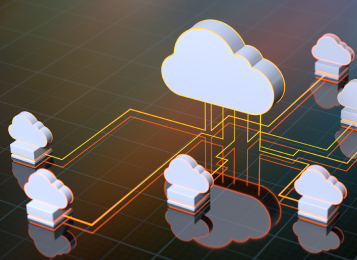
- Integrate with schedulers like Slurm to extend clusters into multiple clouds.
- Provide a single pane of glass for provisioning, scaling, and monitoring jobs.
- Support policy-driven automation, deciding whether workloads run on-premises, in smaller cloud providers or in hyperscale cloud providers depending on cost, compliance, or GPU availability.
Automation reduces complexity and frees researchers to focus on science rather than cluster administration. For HPC use cases, these tools are critical in ensuring workloads can burst to the cloud without losing visibility or control.
Monitoring and Performance
Cloud Performance Management Strategies
HPC workloads are sensitive to both hardware and software inefficiencies. Effective cloud performance management involves:
- Proactive resource monitoring (CPU, GPU, memory, network I/O).
- Job-level performance tracking (MPI efficiency, GPU utilization).
- Bottleneck analysis to identify underperforming nodes or misconfigured storage.
- Benchmarking tools that validate whether performance matches SLAs.
Strategies often combine open-source tools (Prometheus, Grafana) with HPC-specific telemetry provided by orchestrator software.
Cloud Performance Monitoring vs. Cloud Performance Testing
- Performance monitoring is continuous, focusing on real-time metrics and long-term trends. It ensures clusters are operating efficiently day to day.
- Performance testing, by contrast, involves deliberate benchmarking and stress testing to validate system performance under maximum load. It’s especially important during cloud migrations or when scaling to new GPU architectures.

Together, monitoring and testing form a feedback loop that helps HPC operators identify both short-term issues and long-term architectural gaps.
Importance of Cloud Monitoring for HPC Workloads
Unlike typical enterprise workloads, HPC simulations can run for days or weeks across thousands of nodes. Even small inefficiencies—idle cores, underutilized GPUs, misconfigured MPI ranks—can translate into significant delays and cost overruns.
Cloud monitoring tools ensure that every dollar spent translates into computational output. With PSSC Labs, monitoring is bundled into our Cloud HPC Orchestrator, giving users visibility without the need for costly third-party software.
Data and Application Layers
Cloud Data Management for Large HPC Datasets
HPC workloads generate vast datasets, often in the terabyte to petabyte range. Effective cloud data management requires:
- Tiered storage (parallel file systems for hot data, object storage for archival).
- Metadata management for scientific datasets to ensure discoverability and reproducibility.
- Data governance aligned with compliance (HIPAA, ITAR, ISO 27001).
- In-transit optimization, reducing transfer times through parallel I/O or dedicated connections.
By eliminating data egress fees, PSSC Labs removes one of the largest cost uncertainties in dataset management.
Cloud Development Environment for Scientists, Engineers, and Developers
Modern HPC clouds now include developer-first tooling designed for researchers and engineers. These environments typically offer:

- Pre-configured IDEs and JupyterLab notebooks connected to HPC clusters.
- Access to GPU-optimized libraries like CUDA, cuDNN, ROCm, and oneAPI.
- Container support (Singularity, Docker) for reproducible software stacks.
- Integration with version control (Git) for collaborative workflows.
By lowering barriers to entry, these environments democratize access to HPC resources, enabling teams to iterate faster.
Integration with Cloud Computing Applications (AI/ML, Simulations, Scientific Workflows)
HPC software stacks must integrate seamlessly with a wide range of applications:
- AI/ML frameworks: TensorFlow, PyTorch, Hugging Face Transformers.
- Engineering simulations: ANSYS Fluent, StarCCM+, LS-DYNA.
- Scientific workloads: GROMACS, Gaussian, WRF, NAMD.
- Visualization tools: ParaView, Tecplot, MATLAB.
At PSSC Labs, we pre-certify hundreds of these applications, ensuring compatibility without additional licensing fees. This integration shortens time-to-solution and guarantees performance tuning for real-world scientific workflows.
Key HPC Use Cases
HPC is no longer confined to academic research or national supercomputing centers. In the cloud era, HPC workloads span scientific discovery, engineering, business analytics, and digital media. The unifying thread is the demand for large-scale parallel processing, high-throughput data management, and reproducible workflows. Cloud HPC providers have made these capabilities accessible to organizations of all sizes, supporting innovation across industries.
-
Scientific Research and Predictive Analytics
HPC in Genomics, Climate Modeling, and Physics Simulations
Scientific research depends on HPC to process massive datasets and run complex models. Key areas include:
- Genomics: Analyzing billions of DNA base pairs for personalized medicine, epidemiology, and drug discovery. HPC clusters accelerate sequence alignment, genome assembly, and large-scale association studies.
- Climate modeling: Simulating interactions between the atmosphere, oceans, and biosphere to understand both near-term weather patterns and long-term planetary changes.
- Physics simulations: Supporting work in particle physics, materials science, and astrophysics through computationally intensive simulations.
Role of Predictive Analytics Tools Powered by HPC

Predictive analytics extends the reach of HPC beyond discovery to forecasting and decision-making. By running Monte Carlo simulations, machine learning models, and large-scale statistical analyses, HPC systems help scientists and businesses anticipate outcomes ranging from disease outbreaks to stock market fluctuations.
In the cloud, predictive analytics benefits from elastic scaling: Researchers can run thousands of models in parallel, reducing time to insight from weeks to hours.
-
Weather Modelling and Climate Forecasting
Weather prediction is one of the most demanding HPC workloads, relying on real-time ingestion of massive data streams from satellites, radar, IoT sensors, and aircraft systems. HPC enables:

- High-resolution simulations of atmospheric dynamics, ocean circulation, and land-surface interactions.
- Short-term forecasting for severe weather events such as hurricanes, tornadoes, and winter storms.
- Sector-specific insights, from agriculture yield prediction to renewable energy demand modeling.
Cloud-based HPC accelerates this process by providing on-demand access to additional compute capacity during extreme weather events. For example:
- Hurricane tracking: Running ensembles of storm path models to better predict landfall and intensity.
- Renewable energy demand modeling: Aligning grid operations with wind and solar generation forecasts.
- Drought prediction: Simulating soil moisture dynamics to guide water resource management.
By integrating with AI/ML frameworks, cloud HPC enhances accuracy and reduces latency, ensuring forecasts are delivered quickly enough to support disaster preparedness and real-time decision-making in logistics, aviation, and energy.
-
Climate Change Research
Beyond short-term weather, HPC plays a central role in understanding long-term climate change dynamics. Advanced Earth system models require thousands of cores running continuously for weeks or months. These models evaluate:
- Greenhouse gas emissions scenarios and their impact on global temperatures.
- Polar ice melt and sea level rise, essential for coastal risk planning.
- Frequency of extreme events, from wildfires to floods.

Hybrid and multi-cloud HPC platforms are increasingly central to this research. They allow global collaborations to share compute resources, standardize on data sets, and enable reproducibility across institutions. For instance, researchers can use multi-cloud management platforms to federate access to simulations, ensuring scalability even when local infrastructure is constrained.
HPC-driven insights directly inform policy development, corporate sustainability strategies, and international agreements designed to mitigate the impacts of climate change.
-
Engineering and Manufacturing
Digital Twin in Manufacturing and Its Reliance on HPC
The concept of a digital twin (a virtual replica of a physical system) has revolutionized product design and industrial operations in manfacturing and beyond. Digital twins rely heavily on HPC to:

- Run physics-based simulations alongside real-time IoT sensor data.
- Optimize designs by running iterative models of prototypes.
- Predict system failures or maintenance needs before they occur.
For example, in automotive design, HPC-driven digital twins simulate aerodynamics, crash tests, and thermal dynamics. In aerospace, they replicate entire flight systems, reducing the need for costly physical tests.
Broader Use of Digital Twin Technology in Industrial IoT and R&D
Outside of manufacturing, digital twin technology is spreading into energy, logistics, and infrastructure. HPC enables predictive maintenance in smart grids, optimization of warehouse operations, and even modeling of urban traffic flows. The integration of cloud HPC makes these solutions accessible at enterprise scale, without requiring massive upfront investments in hardware.
-
Enterprise and Business Workloads
HPC’s influence now extends into enterprise computing, where advanced analytics and large-scale data processing are essential for competitiveness.
- Financial services: HPC powers real-time risk modeling, fraud detection, and algorithmic trading simulations. These workloads demand low-latency compute and integration with predictive analytics platforms.
- Media and entertainment: From rendering photorealistic VFX to live sports broadcasting powered by AI analytics, HPC is essential for studios and streaming platforms. GPU-accelerated rendering farms in the cloud enable faster turnaround for productions.
- AI/ML training at scale: Training large language models (LLMs) and other deep learning architectures requires clusters of GPUs. Some cloud HPC providers (like PSSC Labs) offer bare-metal GPU instances with predictable pricing, enabling organizations to train and deploy AI models without running into surprise costs.

The Future of High Performance Computing
The coming decade will be transformative for High-Performance Computing. The traditional model of monolithic supercomputers is giving way to cloud-augmented, heterogeneous, and energy-conscious architectures. Simultaneously, the demands placed on HPC are shifting: not just scientific research, but also AI at scale, climate modeling, financial risk, and digital twins are driving requirements for greater compute density, faster interconnects, and new ways of programming. Below, we explore the critical forces shaping the future of HPC.
Convergence with Other Technologies
-
AI

The integration of HPC and AI is no longer optional—it is foundational. Large-scale AI models such as GPT-4 and beyond are trained on supercomputer-class infrastructure, and HPC simulation pipelines increasingly embed AI to accelerate problem solving. For example, AI-enhanced molecular dynamics uses ML surrogates to replace costly simulation steps, slashing runtimes from weeks to hours.
AI also plays a role in cluster operations, where intelligent schedulers can dynamically allocate jobs to optimize utilization, predict hardware failures, and reduce energy use. The future will see HPC and AI evolve symbiotically: HPC powering ever-larger AI models, and AI making HPC systems more efficient and adaptive.
Ebook: Navigating AI Cloud Computing Trends
Uncover the latest trends in AI cloud computing and how to leverage the power of AI.

-
Quantum Computing
Quantum computing remains in its infancy, but it is set to complement rather than replace classical HPC. Near-term systems are expected to integrate quantum accelerators into hybrid HPC environments, with classical nodes handling large-scale data processing while quantum nodes solve specific sub-problems like combinatorial optimization or quantum chemistry.
This model is already visible in early platforms that allow HPC users to offload workloads to quantum simulators or prototype quantum hardware. Long term, quantum may become another specialized accelerator in the HPC toolkit, similar to GPUs today.
-
Cloud and Virtualization
Cloud computing will continue to shape HPC’s future, but the emphasis will be on bare-metal cloud and hybrid HPC delivery. Virtualization overhead is unacceptable for latency-sensitive jobs, so HPC providers are focusing on containerization (e.g., Singularity/Apptainer) for reproducibility while retaining bare-metal performance.

The cloud will also serve as a capacity overflow model, allowing organizations to scale elastically during peak demand without committing to perpetual infrastructure expansion. Providers like PSSC Labs are pioneering fixed-cost bare-metal clouds that bridge the gap between hyperscale elasticity and predictable HPC economics.
-
Exascale Systems
Exascale computing, defined as one quintillion (10^18) floating-point operations per second, has already arrived in national laboratories. The future lies in democratizing exascale-class performance, making it available in the cloud and accessible to enterprises and research institutions without government-scale budgets.

Exascale systems will also become increasingly application-aware. Instead of being general-purpose machines, they’ll integrate specialized accelerators, advanced interconnects, and domain-optimized software stacks tailored for workloads such as genomics or climate science.
-
Advanced Interconnects

The interconnect is the nervous system of HPC. Emerging standards such as InfiniBand NDR (400 Gbps), Ethernet 800G, NVLink 5.0, and CXL (Compute Express Link) will redefine cluster design. These technologies allow resource disaggregation, where CPUs, GPUs, memory, and storage can be dynamically pooled and composed based on workload requirements.
This shift will move HPC closer to a composable infrastructure model, where clusters are no longer statically configured but adapt fluidly in real time.
Heterogeneous Architectures
Future HPC systems will embrace heterogeneity by default. Rather than relying on a single type of processor, they will integrate the best tool for each job.
- CPUs will remain the general-purpose orchestrators, handling sequential code, memory management, and job scheduling.
- GPUs will continue to dominate AI/ML, matrix operations, and highly parallel simulations. NVIDIA’s Blackwell, AMD’s MI300X, and Intel’s Gaudi 3 will define the accelerator landscape.
- Domain-Specific Accelerators (DSAs) such as FPGAs, TPUs, and neuromorphic chips will emerge for specialized workloads, from genomics to graph analytics.
- Quantum accelerators will join the mix for chemistry, optimization, and cryptography.
The move toward heterogeneity isabout energy efficiency just as much as its about raw performance. Running every workload on GPUs or CPUs alone is wasteful. Matching tasks to the most efficient processor will be essential for achieving exascale performance within acceptable power budgets.
Next-Gen Architectures
-
NVIDIA Blackwell GPU and Advanced Cloud Orchestrators
The NVIDIA Blackwell architecture promises a leap in HPC efficiency. Its HBM3e memory provides terabytes-per-second bandwidth, while NVLink 5.0 interconnects allow thousands of GPUs to function as a unified accelerator. For workloads like AI-driven climate modeling or large language model training, this architecture could cut training times by 50% while halving power draw compared to the H100 generation.
In parallel, advanced orchestrator platforms are evolving to manage this heterogeneity. Next-gen orchestrators will:
- Dynamically allocate workloads across CPUs, GPUs, FPGAs, and memory pools.
- Optimize for cost, energy, and performance simultaneously.
- Support hybrid deployments spanning on-prem, cloud, and edge HPC resources.
-
AMD UDNA and RDNA 5
AMD is expanding its GPU roadmap beyond the well-known RDNA series into UDNA (Unified DNA), a successor architecture aimed at unifying HPC, AI, and graphics compute under one scalable platform. RDNA 5, expected to deliver significant performance-per-watt improvements, will further strengthen AMD’s competitiveness in AI/ML and simulation-heavy HPC workloads. Together with the MI300X and MI300A accelerators, these architectures position AMD as a viable alternative to NVIDIA in heterogeneous clusters, particularly for organizations prioritizing open standards (ROCm) and cost efficiency.
-
Intel’s Druid (Xe4) Architecture
Intel is also pushing forward with its GPU roadmap. Its next-generation Druid architecture (codenamed Xe4) follows Ponte Vecchio and Rialto Bridge, targeting both HPC and AI workloads. Druid emphasizes:
- Enhanced scalability through tile-based modular designs.
- Improved double-precision (FP64) throughput for scientific workloads.
- Deeper integration with Intel’s oneAPI ecosystem, allowing heterogeneous programming across Xeon CPUs, Gaudi AI accelerators, and Xe4 GPUs.
Druid aims to give Intel a stronger foothold in the HPC accelerator market, particularly for institutions looking to diversify hardware vendors and avoid CUDA lock-in.
-
Non-von Neumann Architectures
Conventional architectures are limited by the separation of compute and memory. Non-von Neumann models, such as in-memory computing and neuromorphic architectures, aim to overcome the “memory wall” by co-locating compute with storage. For HPC, this means tackling workloads like graph analytics or real-time simulations that are bottlenecked by data movement rather than raw compute.
-
Modular and Open Architectures
Future HPC will be modular, enabling organizations to build clusters piece by piece. Open-source hardware initiatives and open software ecosystems like AMD ROCm and Intel oneAPI are reducing vendor lock-in. This shift will encourage innovation, lower costs, and make HPC more accessible to organizations outside the traditional “supercomputing elite.”
Sustainability and Efficiency
Sustainability is becoming the most critical non-technical challenge in HPC. Exascale systems can draw 20–30 megawatts of power—equivalent to the consumption of a small city. The next wave of HPC will focus on reducing this footprint while increasing compute output.
Key strategies include:
- Dynamic power scaling: adjusting consumption based on workload intensity.
- Cooling innovations: from liquid immersion to direct-to-chip liquid cooling, reducing energy wasted on heat management.
- Green power sourcing: HPC data centers increasingly colocate with renewable energy facilities.
- Architectural efficiency: Arm-based CPUs with Scalable Vector Extensions (SVE) and GPUs tuned for higher FLOPs per watt.
Sustainability will also drive policy and funding decisions. Institutions and enterprises will need to prove not only performance gains but also responsible energy use.
Data-Intensive Architectures
Modern HPC workloads are as much about data as compute. AI, genomics, and climate simulations generate petabytes of data per run, demanding storage and networking systems that can scale seamlessly.
Future architectures will incorporate:
- Exascale-class parallel file systems like Lustre and BeeGFS with throughput >500 GB/s.
- Advanced object storage for cost-effective archival and cross-cloud sharing.
- Disaggregated networking leveraging InfiniBand, NVLink, and CXL for seamless movement of data between compute and storage tiers.
- Edge-to-cloud pipelines where data is preprocessed at the edge before flowing into HPC centers, reducing congestion and latency.
The ability to move, store, and analyze data efficiently will define which HPC systems succeed in the era of data-intensive science.
Talent Development
Technology alone cannot advance HPC—people are the foundation. The skills required to design, program, and operate HPC systems are evolving rapidly. Future talent priorities include:
- Cross-disciplinary training: blending traditional HPC expertise with AI/ML, data science, and domain-specific science.
- Programming diversity: moving beyond MPI and Fortran to include Python, CUDA, ROCm, and oneAPI.
- Automation and DevOps for HPC: as clusters grow more complex, skills in infrastructure-as-code and orchestration become indispensable.
- Global collaboration: open research initiatives and international HPC consortia will pool resources and talent, ensuring progress benefits all.
Investing in talent development will be as important as investing in hardware. Without the right expertise, even the most advanced systems risk underperformance or underutilization.
Conclusion
High-Performance Computing has entered a new era—one where the barriers of scale, cost, and accessibility are being dismantled by cloud-native innovation. What began as the domain of national labs and elite institutions is now a tool available to enterprises of all sizes. Whether the goal is training next-generation AI models, simulating complex climate dynamics, running financial risk models, or building digital twins for manufacturing, HPC has become a strategic enabler of innovation across nearly every sector.
The trends shaping HPC’s future—heterogeneous architectures, exascale performance, AI integration, quantum acceleration, and sustainable design—will only increase the demand for flexible, reliable platforms. Yet as we have seen, managing the costs, performance, and complexity of HPC in the cloud requires more than just raw infrastructure. It requires expertise, orchestration, and a business model aligned with the realities of high-performance workloads.
This is where PSSC Labs stands apart. We offer fixed-cost, bare-metal cloud HPC environments engineered specifically for performance-critical workloads. By eliminating hidden charges, offering customizable system design, and bundling orchestration and monitoring into every deployment, they empower organizations to harness the full potential of HPC without budget surprises or performance compromises.
If your team is ready to scale research, accelerate innovation, and achieve more with your computational resources, now is the time to take the next step. Contact PSSC Labs to build the HPC platform that will power your breakthroughs today—and prepare you for the challenges of tomorrow.